This week, AI image and video technology demonstrated its dual power: captivating mainstream audiences with viral social media trends while simultaneously reshaping the professional landscapes of content creation and manufacturing. From nostalgic photo generators to sophisticated video models challenging traditional studios, the pace of innovation and adoption continues to accelerate, embedding AI deeper into our daily digital lives.
Generative AI Photos Dominate Social Feeds with Viral Trends
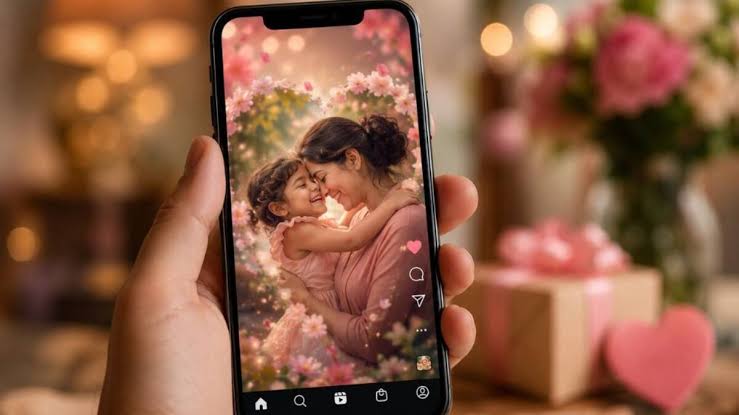
Generative AI has officially cemented its place in mainstream culture, becoming the engine behind several wildly popular social media trends this week. Mother's Day 2026 saw a significant surge in AI-generated images, with users leveraging tools like Google Gemini and ChatGPT to create personalized, often heartwarming, digital tributes. These weren't just simple filters; they involved complex prompts to craft unique portraits, demonstrating a growing user comfort and creativity with AI art. A particularly viral trend involved generating 'childhood self' portraits, allowing individuals to revisit their past through an AI lens, further highlighting the emotional resonance these tools can achieve. The ease of use, coupled with the impressive quality of the outputs, has turned AI image generation from a niche tech curiosity into a widespread form of personal expression and social engagement. This trend underscores the importance of intuitive interfaces and accessible prompt engineering, making sophisticated AI accessible to anyone with a smartphone and a creative idea. The rapid virality of these trends is a testament to how quickly AI can permeate popular culture when it offers a compelling, easy-to-share experience.
AI Video Models Ignite Hollywood Fears and New Creative Frontiers
The burgeoning field of AI video generation is not just making waves; it's creating tsunamis across traditional media industries, particularly Hollywood. While established players like OpenAI's Sora remain closely guarded, newer entrants and rapidly evolving platforms like Kling and Runway are demonstrating capabilities that challenge conventional production pipelines. Industry insiders are openly discussing how these advanced AI video tools could fundamentally alter everything from pre-production visualization to post-production effects, potentially leaving traditional studios on the outside looking in if they don't adapt quickly. The acquisition of Moonvalley by Reka AI signals a strategic move to expand world models and robotics, further integrating sophisticated AI into the fabric of video creation and potentially beyond. This consolidation and rapid development indicate a fierce race to dominate the AI video landscape, promising ever more realistic and controllable video generation. Beyond creation, AI-powered video enhancement tools are also seeing significant uptake, offering automated solutions for tasks like upscaling, noise reduction, and style transfer, democratizing access to high-quality video production and refinement. For platforms like BgRemovit, this explosion in AI video processing and enhancement also opens new avenues, enabling users to refine and optimize their AI-generated or traditionally shot footage with unparalleled efficiency.
Mobile Platforms Elevate AI Photo Editing to New Heights
The battle for supremacy in mobile AI photo editing is heating up, with major tech giants integrating increasingly sophisticated capabilities directly into their core platforms and applications. Google has surprised many by revamping Snapseed, its beloved Android photo editing app, bringing it back to the forefront with updated features that are widely expected to leverage more advanced AI. This move signals Google's commitment to providing powerful, on-device editing tools. Not to be outdone, rumors suggest that iOS 27 could finally bring a suite of robust AI photo-editing features directly to iPhones, a move that would significantly enhance Apple's ecosystem and user experience. Such integrations mean that AI-driven enhancements – from intelligent object removal and selective adjustments to stylistic transformations – will become standard, seamlessly accessible without requiring specialized knowledge or external applications. The shift towards native, on-device AI processing for images reflects a broader industry trend to make powerful AI tools ubiquitous and instantly available, empowering everyday users to achieve professional-grade edits with minimal effort. This push for integrated AI editing directly on mobile devices not only streamlines workflows but also promises to unlock new levels of creative expression for millions of smartphone users globally.
From Pixels to Prototypes: AI Transforms 2D Images into Print-Ready 3D Models
AI's utility is extending far beyond purely visual media, making significant inroads into manufacturing and product design. A notable development this week highlights the impressive accuracy of AI in converting 2D images into print-ready 3D models. Recent comparisons show that tools like Tripo are outperforming competitors such as Meshy and Hitem3D in generating precise 3MF files from simple images. This capability is a game-changer for industries ranging from rapid prototyping and custom manufacturing to entertainment and architectural visualization. The ability to quickly and accurately translate a visual concept into a tangible, printable 3D object drastically shortens design cycles and reduces the barrier to entry for creators. Imagine a designer sketching an object, taking a photo, and having an AI instantly generate a detailed 3D model ready for a 3D printer. This technology not only accelerates the ideation-to-production pipeline but also democratizes access to advanced manufacturing techniques. It represents a crucial step towards a future where physical objects can be generated almost as easily as digital images, blurring the lines between the digital and physical realms and opening up entirely new possibilities for innovation across countless sectors.
What This Means
The past week underscores a critical inflection point for AI in visual media. On one hand, consumer-facing AI image tools are achieving unprecedented viral adoption, proving their mainstream appeal and ease of use. This signals a future where AI-generated content is not just common but expected in personal digital expression. On the other, the professional landscape, particularly in video and 3D modeling, is undergoing a profound transformation. Advanced AI models are not merely assisting; they are fundamentally altering workflows, challenging traditional industry structures, and opening up new frontiers for efficiency and creativity. The integration of AI into mobile platforms further democratizes these powerful tools, making sophisticated capabilities accessible to virtually everyone. As AI continues its rapid evolution, we are witnessing a convergence where consumer convenience meets industrial disruption, reshaping how we create, consume, and interact with visual content across all dimensions.
Sources
- Mother’s Day 2026 Goes Digital as AI-Generated Images Become Viral Social Media Trend - pragativadi.comopen_in_new
- Viral AI photo trend: How to create your 'childhood self' portrait, check the exact prompts to try now - MSNopen_in_new
- Google Gemini AI Photo Editing Prompts on Mother’s Day 2026 - Jagran Joshopen_in_new
- Surprise Update Brings "Snapseed" Back to the Forefront: Google Revamps Photo Editing App on Android - صوت الإماراتopen_in_new
- Reka AI seeks to expand world model and robotics business with Moonvalley acquisition - 디지털투데이