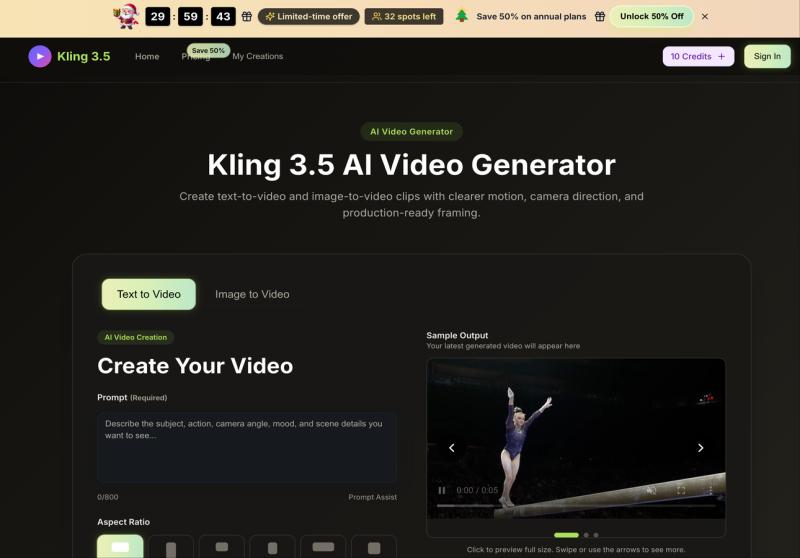
The AI image and video landscape is accelerating its march towards ubiquitous accessibility and practical application. Today, we're seeing aggressive moves in browser-based AI video generation, significant e-commerce integration of visual AI, and traditional camera manufacturers doubling down on AI-powered editing. This signals a market maturing beyond mere novelty, focusing keenly on user experience and tangible business value.
Kling 3.5's Browser-Based AI Video Takes Center Stage
A new contender has emerged in the fiercely competitive AI video generation arena: Kling 3.5. The platform has officially launched its browser-based offering, enabling users to transform text and images into dynamic video content directly within their web browsers. This move is a direct challenge to established players like RunwayML and the highly anticipated OpenAI Sora, democratizing access by removing the need for specialized software or high-end local hardware. The ability to generate complex, high-quality video from simple prompts or existing images in a browser dramatically lowers the barrier to entry for creators, marketers, and businesses alike. Financial analysts are already taking notice, with reports from JPM indicating that Kling AI's valuation could reach an impressive USD 52 billion, underscoring the immense market potential and investor confidence in its technology. This launch isn't just about a new tool; it's about a strategic shift towards cloud-native, accessible AI video production that could reshape creative workflows across industries.
E-commerce Embraces AI: JD.com's Virtual Try-On Revolution
Online retail is undergoing a significant transformation, with AI-powered visual tools enhancing the customer experience. Chinese e-commerce giant JD.com is leading this charge, rolling out a new AI virtual try-on feature just ahead of its massive 618 shopping festival. This innovative capability allows customers to virtually 'try on' clothing and accessories, bridging the gap between online shopping convenience and the tactile experience of physical retail. By generating realistic visualizations of how garments would look on a user's body, JD.com aims to reduce return rates, increase conversion, and build greater customer confidence. This development highlights the critical role AI image technology plays in creating immersive and personalized shopping journeys. Platforms like BgRemovit, with its advanced virtual try-on solutions, are at the forefront of enabling businesses to integrate such powerful AI tools, offering scalable and sophisticated ways for consumers to visualize products before purchase, ultimately enhancing satisfaction and boosting sales in the competitive e-commerce landscape.
Traditional Camera Giants Adapt: Panasonic Integrates AI Editing
While generative AI captures headlines, traditional photography and videography companies are quietly integrating AI into their core products, signaling a broader industry shift. Panasonic, a stalwart in the imaging world, is targeting premium creators with its new LUMIX L10 compact camera, which comes bundled with significant AI editing upgrades. This move isn't about replacing human creativity but augmenting it, providing sophisticated AI tools for tasks like noise reduction, intelligent color grading, object removal, and enhanced subject tracking directly within the camera's ecosystem or companion software. For professional and enthusiast photographers, this means less time spent on tedious post-processing and more focus on the creative act of capturing moments. Panasonic's strategy demonstrates that AI is no longer just for specialized labs or niche apps; it's becoming an expected, integral component of high-end imaging hardware. This integration ensures that even as AI generates new images and videos from scratch, it's also empowering and streamlining the traditional creation process, offering a hybrid future where human skill and artificial intelligence work in concert.
The Evolving Landscape of AI Video: From Viral Clips to Feature Films
The burgeoning field of AI video generation is marked by both incredible breakthroughs and persistent challenges. While platforms like Kling 3.5 make it easier than ever to create short, viral-ready clips, the industry grapples with the inherent difficulty of producing long-form AI animation. Achieving consistent character models, coherent narratives, and seamless scene transitions over extended durations remains a significant hurdle, requiring advancements far beyond current capabilities. This complexity highlights a fundamental divide: the ease of generating short, engaging content versus the monumental effort required for cinematic-quality, feature-length productions. Simultaneously, the market is witnessing a fascinating dynamic in the accessibility of AI video tools. The gap between free and paid image-to-video AI tools appears to be closing, with increasingly capable free options emerging. This trend puts pressure on paid platforms to differentiate through superior quality, advanced features, or specialized workflows. As the technology evolves, we can expect a stratification of tools: free options for quick, creative experimentation, and premium services for professional-grade, long-form content that demands fidelity, consistency, and control. The journey from static image to fluid, narrative video is still unfolding, promising a future where the current limitations will eventually yield to more sophisticated, robust AI animation capabilities.
Editor's Take
Today's news underlines a critical phase in AI image and video development: the pivot from experimental marvel to practical utility. The rapid expansion of browser-based video generation tools like Kling 3.5 is a game-changer for accessibility, democratizing capabilities that were once the domain of specialists. This, coupled with significant venture capital interest, suggests a robust and competitive market is forming. Equally compelling is the integration of AI into tangible applications, such as JD.com's virtual try-on, which directly addresses consumer needs and drives commercial value. This isn't just about generating pretty pictures; it's about solving real-world problems and enhancing user experiences. Even established camera manufacturers like Panasonic are recognizing the inevitable and embedding AI directly into their hardware, proving that AI is not a niche but a fundamental layer of modern visual technology. While the dream of full-length AI-generated features remains distant, the progress in short-form content and practical applications signals an exciting, productive era for AI in visual media. The next frontier will undoubtedly involve refining consistency and control, pushing beyond impressive clips to truly coherent, scalable creative outputs.
Sources
- Kling 3.5 AI Video Generator Launches Browser-Based Platform for Text and Image to Video Creation - openPR.comopen_in_new
- JD.com Rolls Out AI Virtual Try-On Feature Ahead of 618 Shopping Festival - Pandailyopen_in_new
- JPM: If Kling AI Valuation Reaches USD52B, KUAISHOU-W (01024.HK) TP May Hit HKD73 - AASTOCKS.comopen_in_new
- Why Long-Form AI Animation Is Harder Than Viral AI Clips - vocal.mediaopen_in_new
- Image to Video AI: Is the Gap Between Free and Paid Tools Finally Closing? - Nokiamob