Arms of God is the $11 solo-developed indie project by Dark Jay Studio that is quietly putting bloated AAA titles to shame. Dropping into Early Access in June 2026, this round-based bullet heaven marries the gothic, gore-soaked aesthetics of DOOM with the addictive meta-progression of Vampire Survivors and Brotato. But what truly separates it from the pack is the sheer mechanical depth of its arsenal. You aren't just picking up random wands to auto-fire at bats; you are wielding five mechanical arms simultaneously, snapping together a deep 12-slot attachment system, and merging firearms into screen-clearing monstrosities across 60 handcrafted levels.
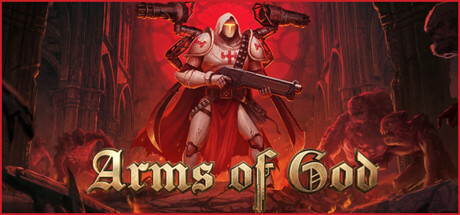
If you want to survive the hellish onslaught, defeat epic encounters like the Bishop boss in Act II, and restore the ancient Order, you need to understand how to build your arsenal. The in-game codex (introduced in update v0.41) helps track your discoveries, but navigating the exact recipes for Tier 3 annihilators takes trial and error. Here is the complete guide to all weapons, the exact merge combinations, and the synergistic builds that will carry you through Nightmare mode.
Understanding the Merge System (Tier 1 to Tier 3)
At its core, the weapon progression in Arms of God relies on a rigid but highly rewarding tier system. Most weapons start at Tier 1. When you obtain two identical Tier 1 weapons, you can fuse them in the hub or during a run to create a Tier 2 variant. Combine two identical Tier 2 weapons, and you unlock a devastating Tier 3 weapon.
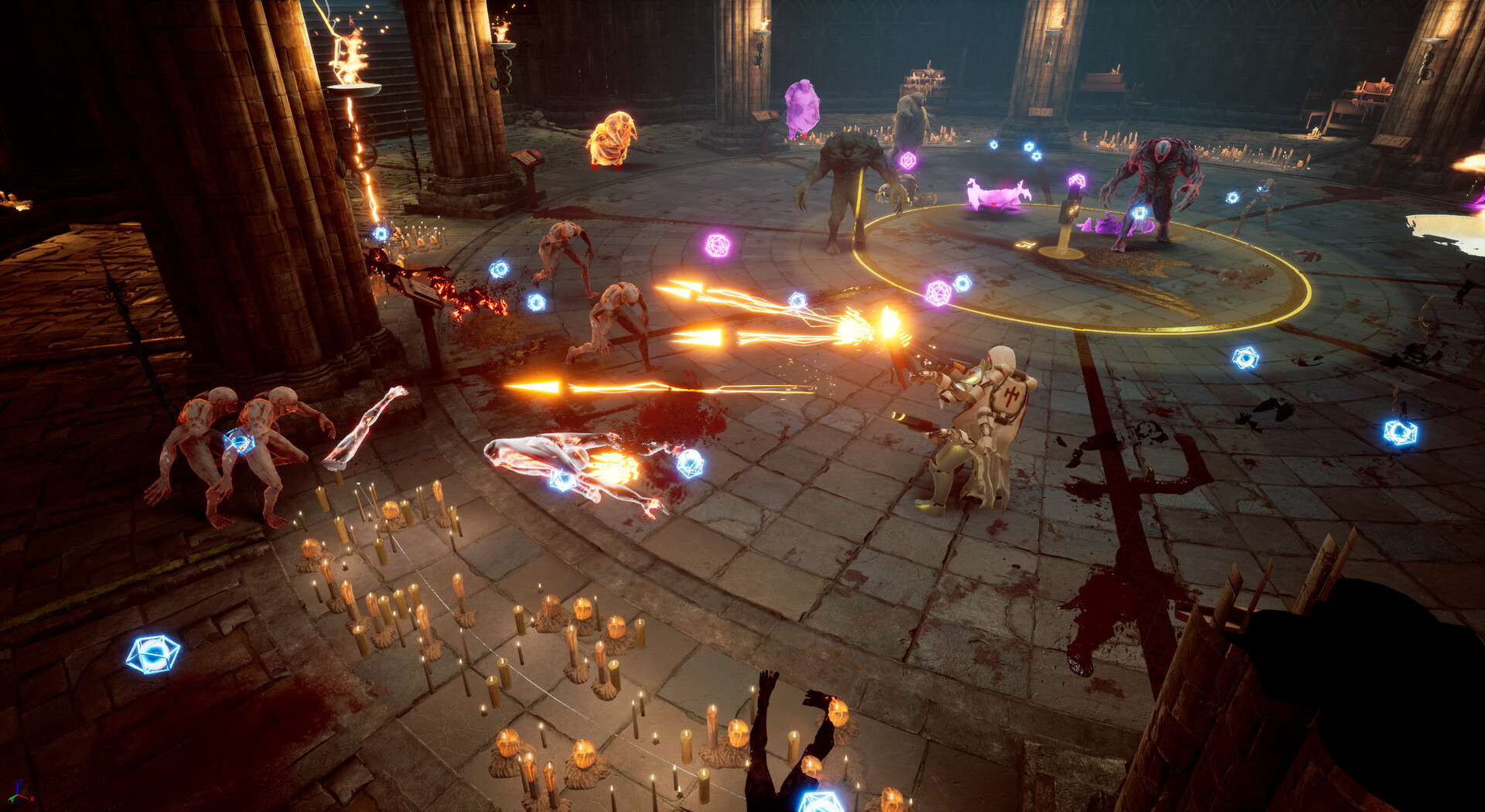
However, the game throws a few curveballs to keep you on your toes. Not every weapon can be merged right out of the gate. Certain Tier 2 armaments—like the Flamethrower, Devastator, and Proximity Spark—must be unlocked through the Gunsmith via metaprogression buildings before they appear in your run's prayer menu. Once unlocked, these advanced weapons bypass the Tier 1 grind, allowing you to start higher-difficulty runs with a distinct advantage.
The real secret sauce of the game is the 12-slot attachment system. Every weapon can hold up to 12 buffs or modifiers. When you merge a secondary weapon into your primary weapon, the primary weapon inherits a portion of those stats. This means you should never merge an empty weapon; always load up your secondary guns with elemental buffs before feeding them to your main damage dealer to maximize your inherited power without consuming your primary's precious 12 slots.
The Complete Arms of God Weapon Merge List
Knowing your upgrade path ahead of time prevents you from wasting weapon slots on dead-end builds. While the developer is still adding new Tier 3 evolutions in Early Access, the community has already mapped out the most destructive combinations available. Here are the confirmed weapon merges you need to memorize:
The Machine Gun Path
- Gatling: Auto Cannon + Auto Cannon = Gatling. A major upgrade for bullet-hose builds, offering an absurd fire rate and sustained kinetic damage that shreds unarmored fiends.
The Precision & Sniper Path
- Ion Rail: Railgun + Railgun. The ultimate single-target eliminator. Perfect for melting epic bosses before they can close the distance.
- Light Beam: Longshot + Longshot. A massive upgrade for sniper-focused templars who prefer to pick off high-value targets from the edge of the screen.
The Fire & Explosive Path
- Annihilator: Devastator + Devastator = Annihilator. Turns explosive area-of-effect damage into a screen-wiping nuke.
- Overdetonator: Detonator + Detonator. Takes raw explosive damage to another level, ideal for clearing dense swarms.
- Heavenfall Incinerator: Firestorm + Firestorm. Overwhelms large groups with cascading fire damage that lingers on the battlefield.
- Infernothrower: Flamethrower + Flamethrower. A thicker, hotter version of the base Flamethrower that excels at area denial.
- Hellblade: Infernoblade + Infernoblade. The final form of the Ember Sword line, essential for melee fire builds.
- Infernal Crossbow: Blazing Crossbow + Blazing Crossbow. Excellent damage scaling for ranged fire builds.
- Pyrefield: Flarefield + Flarefield. Upgraded area denial that leaves burning patches across the arena.
- Blazing Halberd: Burning Pike + Burning Pike. A powerful fire-based polearm with a massive sweep radius.
The Holy & Ice Path
- Divine Crusher: Consecrated Mace + Consecrated Mace. A holy-themed powerhouse that scales beautifully into the late game against heavily armored demons.
- Sanctum Pike: Lance + Lance. A holy spear evolution providing excellent reach and piercing damage.
- Frostreaver: Freezing Blade + Freezing Blade. The premier ice-focused melee weapon, vital for crowd-controlling fast enemy variants like the Hell Sloth.
The Electric Path
- Shockstring: Thunder Crossbow + Thunder Crossbow. A high-tier lightning weapon that chains damage between clustered demons.
Best Weapon Combinations & Builds
Having a list of weapons is one thing; knowing how to combine them across your five available arm slots is another. The best builds in Arms of God rely on elemental synergy and overlapping areas of effect.
The Hellfire Engine
Early in the game, fire is your best friend. The Hellfire Engine build focuses purely on raw damage and area denial, turning your templar into a walking inferno. A balanced loadout typically relies on the Infernoblade 65% of the time for direct strikes, while the Infernothrower 35% of the time provides necessary area denial.
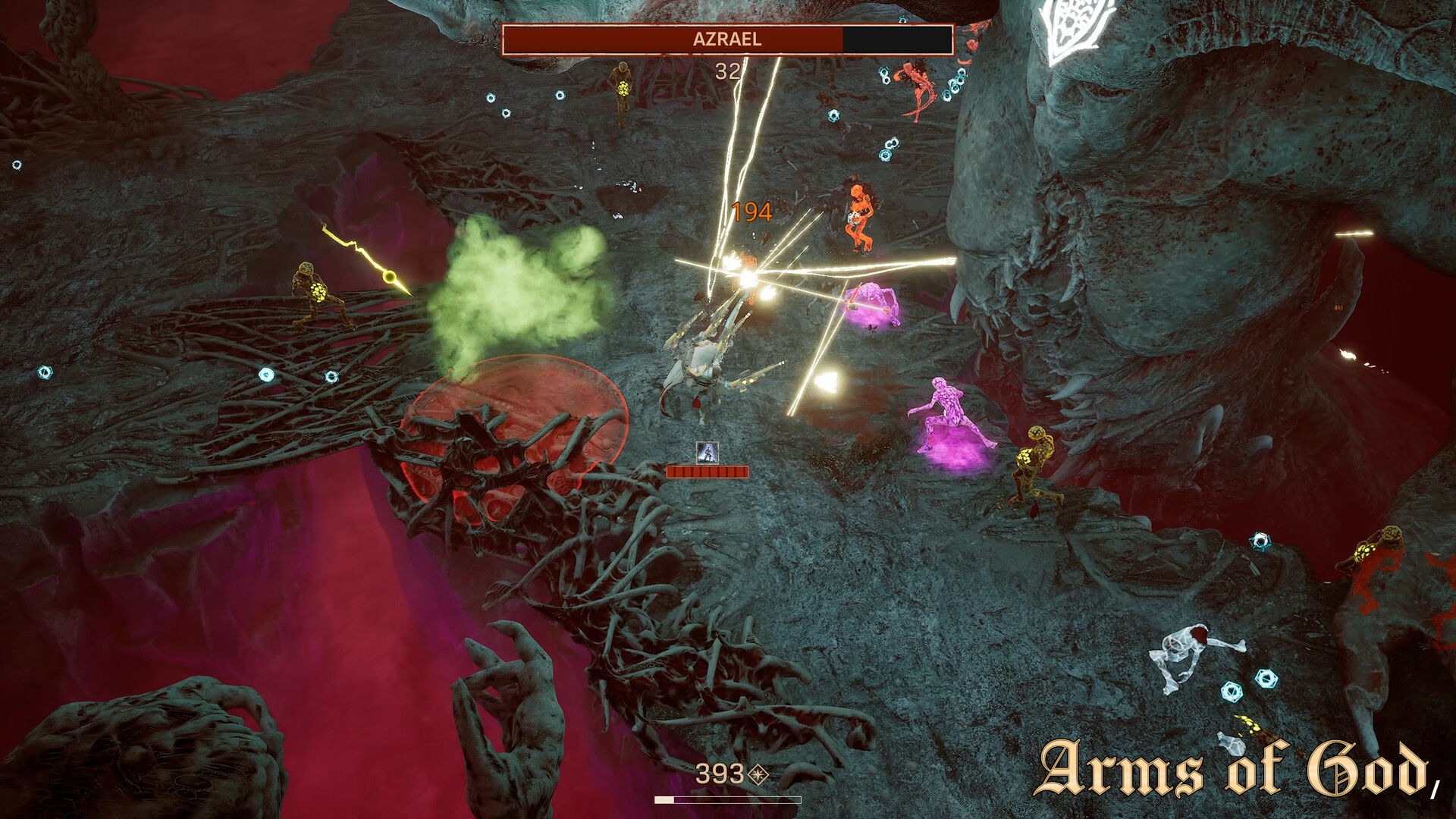
Your primary weapon should be the Hellblade, supported by the Infernothrower and Pyrefield. The Pyrefield locks down the map, creating choke points that melt lesser demons like Marionettes. As the horde funnels toward you, the Infernothrower strips away their armor. Any elite enemies that survive the gauntlet are immediately cleaved by the Hellblade. Because all three weapons share the Fire element, you can stack universal Fire damage blessings, making your entire loadout exponentially stronger with every level up.
The High-Voltage Sniper
For players who prefer to keep their distance and prioritize survivability, the electric element offers unmatched utility. This build revolves around critical hits, chain lightning, and sustaining your health pool through the mid-game difficulty spikes.

Equip the Shockstring alongside the Ion Rail. The Thunder Crossbow provides massive electric lifesteal, and once evolved into the Shockstring, its utility skyrockets. Electric arcs chain between multiple demon targets, applying hit-stun and triggering lifesteal mechanics to keep your health topped up. Meanwhile, the Ion Rail serves as your boss-killer. Ion Rail attachments grant precision targeting, and the 12-slot capacity allows stacking critical hit modifiers to terrifying levels. Inherited stats from secondary weapons boost base damage, ensuring that you can effectively one-shot high-value targets from across the arena while the Shockstring keeps the swarm at bay.
The Holy Demolition
Fire might carry you through the early acts, but Holy damage is the undisputed king of the endgame. Bosses in Act 4 and beyond possess massive resistances, requiring the armor-shredding properties of the Holy element.
The core of this build is the Divine Crusher paired with the Sanctum Pike. The Sanctum Pike offers incredible piercing reach, allowing you to deal damage while backpedaling. The Divine Crusher acts as your panic button; its wide, sweeping strikes deal devastating damage to anything that breaches your inner circle. Supplement these with high HP, Regen, and Armor blessings. Bosses are too fast to kite forever—you will get hit. Sticking close to the "Crux" for its buffs and utilizing the Holy Demolition build ensures you can stand your ground, tank the hit, and trade blows efficiently.
Advanced Tips for the 12-Slot Attachment System
The biggest mistake new players make is rushing their Tier 3 merges without optimizing their attachments. Because you can wield five weapons, you have a massive amount of inventory space to play with before committing to a merge. If you merge two blank Tier 1 Auto Cannons, you simply get a blank Tier 2 weapon. You are leaving massive amounts of free damage on the table.
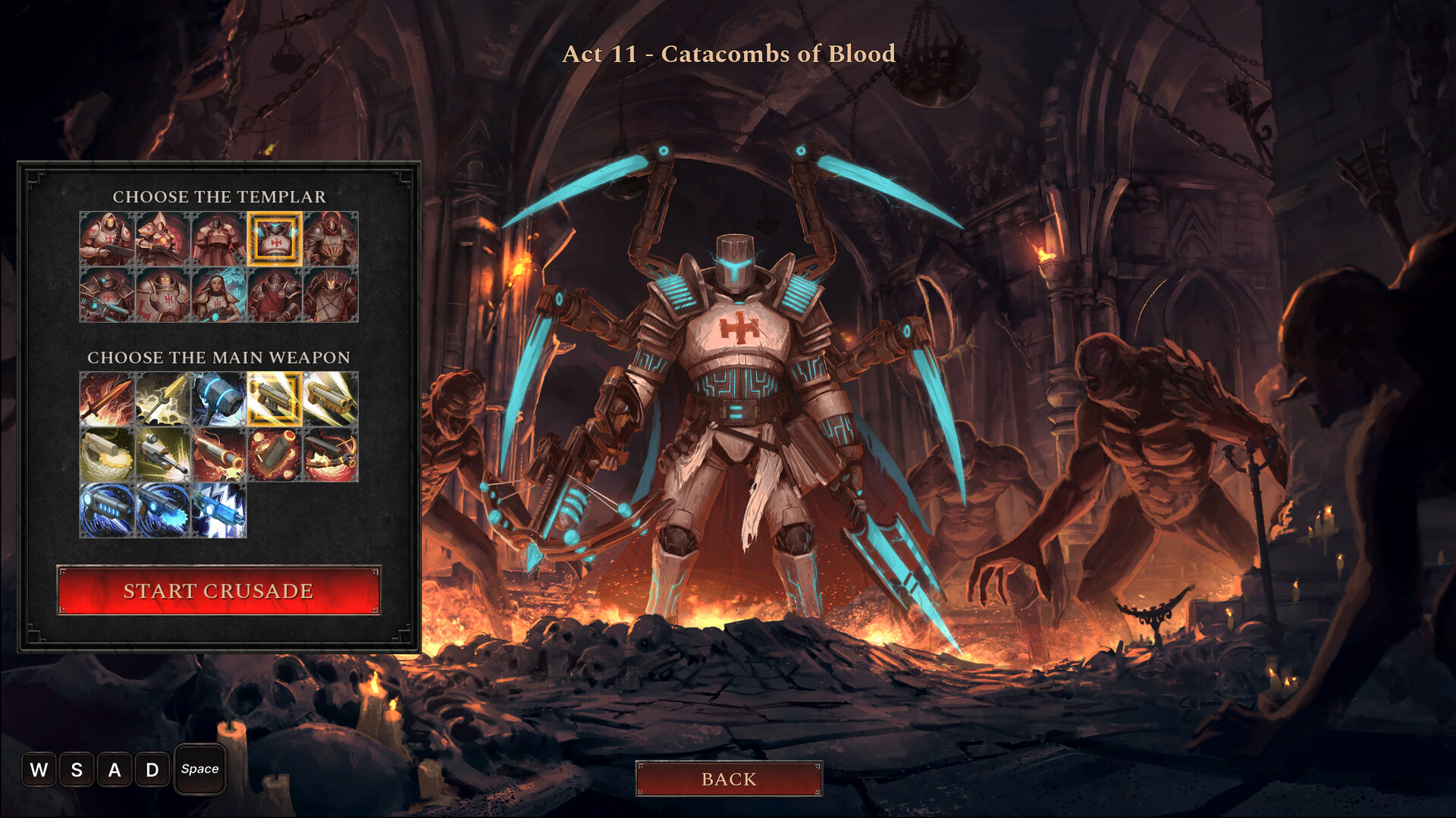
Instead, use your secondary weapon slots as "batteries." Buffing a secondary weapon fills its slots with cheap, low-tier modifiers that you don't necessarily want clogging up your primary weapon's capacity. Merging it into the primary weapon transfers the power. The primary weapon absorbs a percentage of those stats, and you'll see the notification that stats inherited! Maximum damage achieved without consuming core slots on your main weapon.
This strategy is mandatory for Nightmare mode. You essentially want five fully souped-up weapons with different buff styles all sitting at level 3, constantly feeding inherited stats into one another. It turns the game from a simple bullet heaven into a deep, heavy-metal spreadsheet simulator where every decision directly impacts your damage output.
Sources
- Arms of God Official Steam Community Guides & Patch Notes (v0.41 - v0.521).
- Community Weapon Merge Guides and Tier Lists via r/armsofgod.
- Dark Jay Studio Early Access Developer Updates.
Arms of God is a masterclass in how to evolve the survivor-like genre. By giving players granular control over weapon attachments and an intuitive but deep merging system, it ensures that no two runs ever feel the same. Start experimenting with these combinations, feed your secondary weapons wisely, and bring divine justice to the horde.