When you trade a sword for a spoon to save the village of Palo Pori, knowing the best cards Beastro has to offer is the difference between a triumphant puppet theater victory and a devastating combat wipe. Timberline Studio’s "crunchy-cozy" culinary RPG operates on a deceptively simple premise: you are what you eat. Your prowess on the cutting board directly dictates your Caretaker’s arsenal in the wild. Feed them the right ingredients, and you’ll effortlessly outplay monsters like the Conedor and Bubblizard; feed them a poorly optimized flavor profile, and you’ll find yourself out-tricked and overwhelmed by late-game bosses.
If you want to master the trick-taking combat system and keep the encroaching darkness at bay, you need to understand flavor magic. Here is the definitive guide to drafting, cooking, and deploying the most powerful decks in the game.

The Meta of the Kitchen: Why the Best Cards Beastro Offers Depend on the Caretaker
Unlike traditional roguelite deckbuilders where you acquire power by visiting a merchant or slaying a boss, Beastro completely removes the loot drop from the core deckbuilding loop. Your deck is built in the kitchen. Every wild herb you forage, every fish you catch, and every crop you harvest in Palo Pori translates directly into a specific card. When you serve a carefully crafted dish to a Caretaker, you are literally handing them their combat hand for the day.
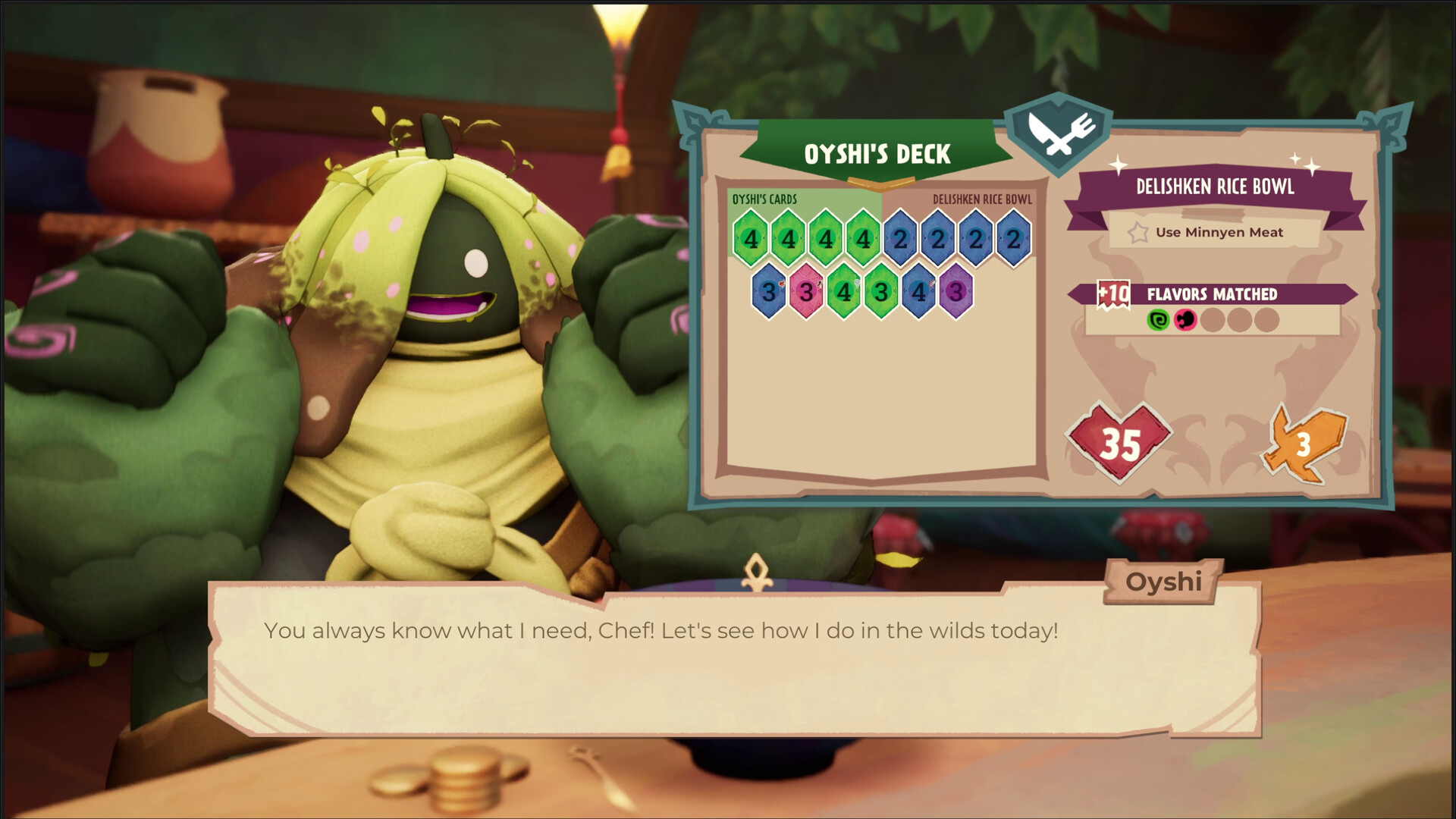
Because combat is heavily inspired by traditional trick-taking card games (think Spades or Euchre, but with fantasy magic), raw attack power isn't everything. You have to match flavor magic to initiate a trick, neutralize enemy plays when you are outmatched, and enhance your moves using your limited stamina pool.
With the recent v1.0.5 balance patch, Timberline Studio made a crucial quality-of-life change: studying recipes no longer consumes ingredients. This frees you up to experiment with complex flavor profiles without bankrupting your pantry. This is essential, because a card that works perfectly for one Caretaker might be dead weight in the hands of another. The value of a card is entirely dependent on the Caretaker wielding it and the specific monster mechanics they are facing.
Mastering the Puppet Theater: Trick-Taking Mechanics
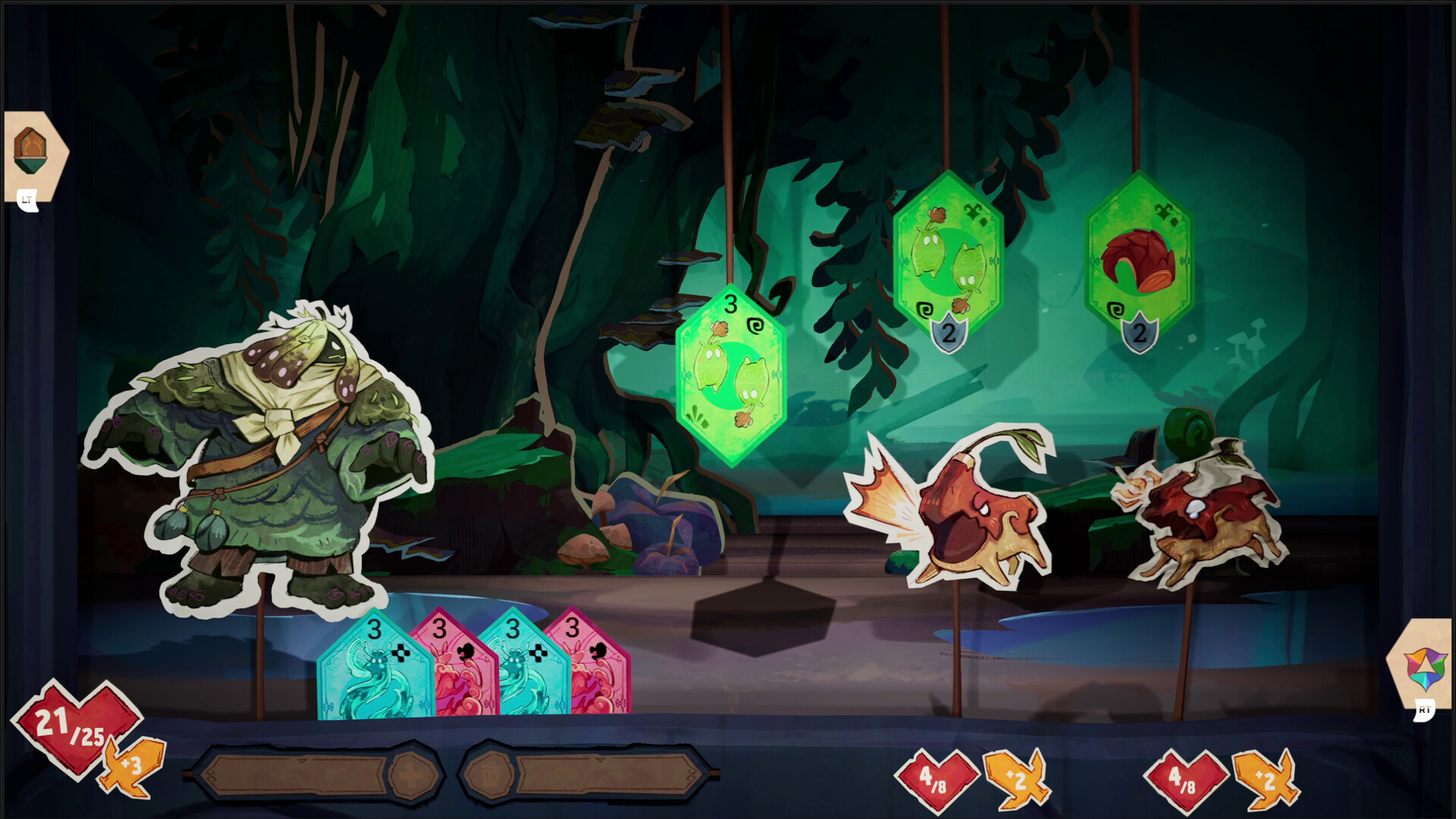
The combat in Beastro is recounted through a beautifully animated Unreal Engine 5 puppet theater, but don't let the charming visuals fool you—the underlying mechanics are ruthless.

When a monster leads a trick with a specific flavor (for example, a Salty attack), you are forced to respond. If you want to win the trick and deal damage, you must match that flavor magic with a higher value card. If you don't have the matching flavor, you can throw a neutralizing card to mitigate the incoming damage, or sacrifice an enhancing card to power up a weaker move.
This is why utility cards that manipulate the rules of the trick are highly sought after. Cards that put enemies to sleep, blow away their drafted hands, or apply persistent status effects are the true win conditions of Beastro.
Top Tier List: The Best Cards Beastro Players Can Draft for Oyshi
Oyshi is the first Caretaker you encounter, and he has an undeniable affinity for Umami (green) flavors. Because Oyshi is your primary defender in the early game, the best cards Beastro provides for him revolve around stacking defensive buffs and neutralizing early-game monster mechanics.

For Oyshi, you want to focus your farming efforts on green ingredients like peas, wild herbs, and mushrooms.
- Pea Pod Strike: A staple of the early game. By incorporating basic green vegetables into Oyshi's meals, you unlock this reliable Umami attack. It matches perfectly against early-game woodland monsters and provides a solid baseline of damage.
- Chamomile Slumber: Crafted from sweet and neutral herbs, this utility card is an absolute lifesaver. It puts the enemy to sleep and effectively blows away the next card they intended to play, allowing you to steal the initiative in the trick-taking phase.
- Truffle Guard: A heavy Umami defensive card that absorbs significant damage. When facing monsters with high burst potential, leading with a Truffle Guard ensures Oyshi survives the round without dipping into his health pool.
Oyshi's deck should be straightforward and aggressive. Since he lacks the complex stamina regeneration of the later Caretakers, you need to win tricks quickly and decisively.
Bitter and Salty Synergies: Finding the Best Cards Beastro Has for Kalan
Kalan, the Bitter Caretaker, fundamentally changes how you approach the mid-game. Unlike Oyshi's straightforward Umami brawling, Kalan thrives on discard mechanics, stamina management, and wars of attrition.
According to the v1.0.5 patch notes, Kalan’s passive effect now grants a 50% chance of restoring stamina for the card that was discarded. This was specifically implemented to avoid late-game milling (running out of cards) and allows Kalan to sustain himself back to full health during protracted puppet theater battles.
- Bitter Root Discard: This card allows you to intentionally trash a low-value card from your hand to trigger Kalan's passive. When paired with the 50% stamina restore, you can essentially generate free energy to fuel your enhancing cards.
- Salt Crystal Aegis: Acquired after completing the questline for the Salty Caretaker (found in the same area as the Sour Spirit, marked with a "?" and "!"). This card casts a persistent shield that neutralizes incoming damage across multiple tricks.
- Sour Spirit Venom: The Sour Spirit questline unlocks ingredients that apply Poison. The recent patch confirmed that Poison added to cards from the Sour Spirit now deals direct damage and has a high chance to apply a stacking poison debuff. For Kalan, dragging out the fight while the monster ticks down from poison is a primary win condition.
Late-Game Strategy: The Best Cards Beastro Hides for the Final Boss
By the time you face the final boss—who now boasts a brutal base attack value of 10 in phase two—your deck needs to be perfectly tuned. You cannot brute-force your way through that kind of damage. You need cards that leverage specific monster mechanics against them.
The wilds are populated by creatures like the Conedor and the Bubblizard, both of which have received significant mechanical tweaks. The Conedor’s Spiky effect now activates regardless of whether it wins or loses the trick, dealing guaranteed return damage. Similarly, the Bubblizard’s shield effect activates independently of the trick's outcome.
To counter this, you must draft Monstrous ingredients. When your Caretakers return from a successful run, they occasionally bring back parts of the defeated monsters. Cooking these into your meals unlocks boss-tier cards.
- Conedor's Spike: By feeding Kalan or Kanal a dish infused with Conedor ingredients, you gain access to the Spiky status effect yourself. When applied, you will deal return damage every time you win a trick, turning the final boss's massive 10-attack swings into a liability.
- Bubblizard Scale: Grants an unbreakable shield for one trick, completely neutralizing the enemy's flavor magic regardless of the numerical value played.
Ranking the Top Culinary Combat Cards
To summarize the current meta, here is a breakdown of the most impactful cards to target when planning your daily menu at the restaurant:
| Card / Ingredient Origin | Flavor Profile | Best Caretaker Synergy | Primary Combat Effect |
|---|---|---|---|
| Pea Pod Strike | Umami (Green) | Oyshi | High base attack; matches early-game green magic perfectly. |
| Salt Crystal Aegis | Salty | Azur / Kanal | Casts a persistent shield; neutralizes incoming damage. |
| Sour Spirit Venom | Sour | Kalan / Kanal | Deals base damage and applies a stacking Poison effect over time. |
| Chamomile Slumber | Sweet / Neutral | Oyshi | Puts the enemy to sleep; blows away their next drafted card. |
| Conedor's Spike | Monstrous | Kalan | Applies 'Spiky' status, dealing return damage on trick wins. |
Frequently Asked Questions (FAQ)
How do I unlock new cards in Beastro? Cards are not unlocked through traditional leveling or booster packs. Instead, you must gather ingredients by farming, fishing, and foraging in Palo Pori. You then use the cooking minigames to create dishes. The specific ingredients and flavor profiles (Umami, Bitter, Salty, etc.) of the meal you feed to a Caretaker dictate the cards they will have in their deck for that day's run.
What does the Spiky effect do? The Spiky effect damages the opponent and applies a persistent "spiky" debuff upon winning a trick. However, be warned: following the v1.0.5 patch, the enemy Conedor's Spiky effect will activate regardless of whether it wins or loses the trick, making it a highly dangerous mechanic to attack into without a shield.
How do I prevent late-game milling with Kalan? Kalan relies heavily on stamina and discard mechanics. To prevent milling (running out of cards before the monster is defeated), utilize his passive ability. Discarding cards with Kalan now has a 50% chance to restore stamina, allowing you to outlast opponents and heal back to full health during long encounters.
Where is the Sour Caretaker located? If you are looking to unlock Sour flavor cards and Poison mechanics, you need to find the Sour Spirit. They are located in the exact same area where you found the Salty Caretaker (the guy with the salt crystals). Look for an NPC marked with a "?" and a "!" above their head in the overworld.
Does experimenting with recipes waste my ingredients? Not anymore! As of the latest patch, studying and experimenting with recipes in the kitchen no longer consumes your hard-earned ingredients. This allows you to freely test different flavor combinations to find the optimal deck for your Caretakers before committing to a final dish.
Beastro is a masterclass in blending disparate genres. By tying the relaxing, methodical pace of a cozy cooking simulator directly to the crunchy, mathematical rigor of a trick-taking card game, Timberline Studio has created something wholly unique. Master your menu, balance your flavors, and the puppet theater will always end in a standing ovation.