If you are struggling to survive the nightly puppet theater battles in Timberline Studio’s latest cozy-crunchy RPG, you aren't prepping the right ingredients. The best combat meals Beastro offers aren't just about restoring health—they are the literal cards your Caretakers use to fight. In Beastro, saving the world of Palo Pori doesn't happen with a sword; it happens with a spoon. You play as Panko, a sous chef tasked with feeding the village's protectors after your mentor mysteriously disappears. Every ingredient you farm, forage, and cook translates directly into a deckbuilding card suit during the nighttime trick-taking combat phase. If you want to outplay the monsters, you need to stop cooking blindly and start understanding flavor magic, deck synergies, and Caretaker preferences.

Why Your Kitchen Prep Defines the Best Combat Meals Beastro Players Can Make
Beastro flips the traditional hero's journey on its head. You aren't the one swinging the sword; you are the logistics engine keeping the warriors alive. The game operates on a strict, three-phase daily rhythm. In the morning, you gather ingredients and manage your farm. In the afternoon, you team up with Flambe, the magical fire spirit, to run the restaurant and develop recipes. At night, the Caretakers you fed recount their adventures through a beautifully animated puppet theater, which plays out as a trick-taking card game.
Here is the catch that most beginners miss: your kitchen prep is your deckbuilding. You cannot alter a Caretaker's deck once they enter the theater. The meal they ate dictates the suits, values, and special effects of the cards they draw.
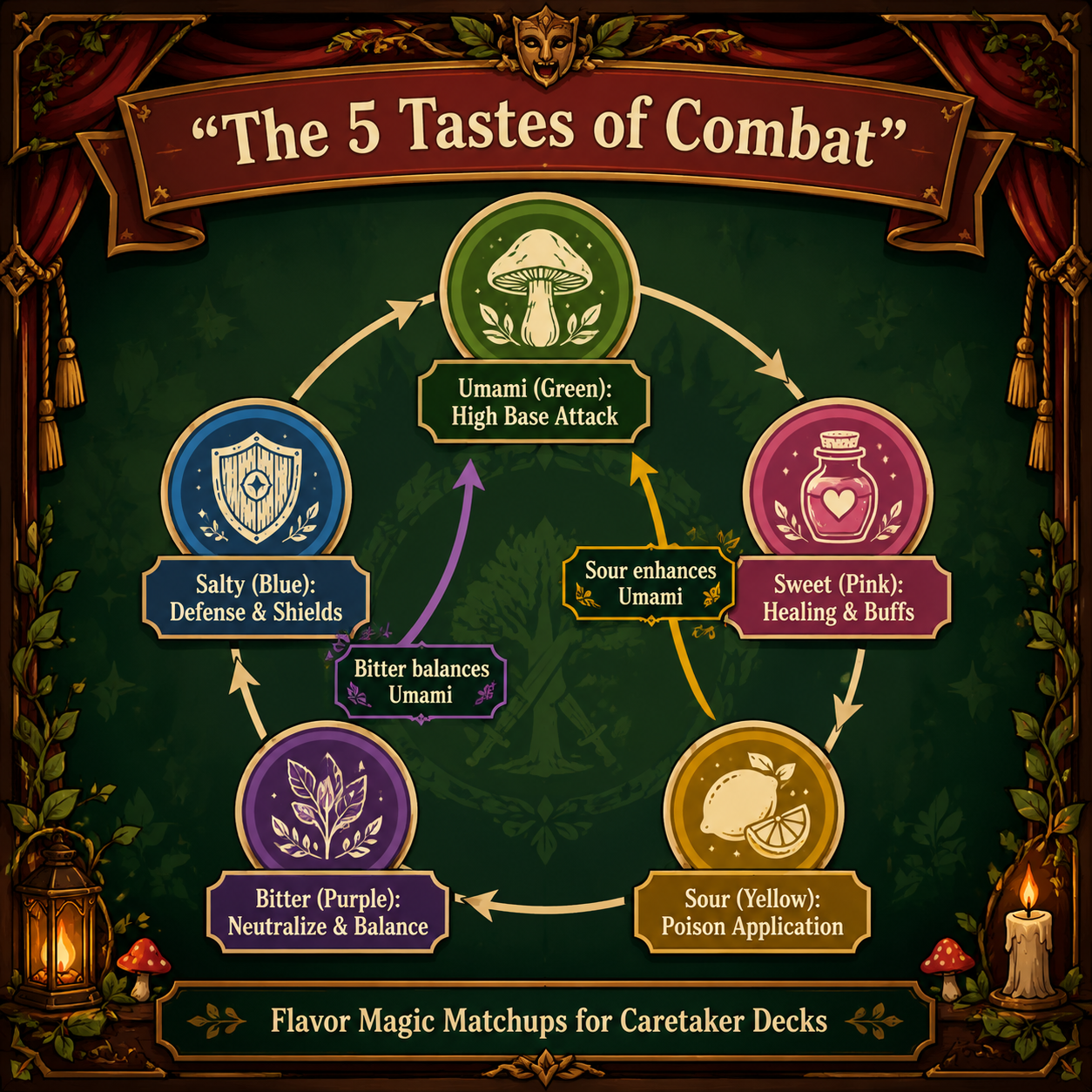
To build a winning deck, you must master the flavor suits. The 5 Tastes of Combat dictate everything in the puppet theater. Umami (Green) provides High Base Attack. Sweet (Pink) focuses on Healing & Buffs. Sour (Yellow) is for Poison Application. Bitter (Purple) is used to Neutralize & Balance enemy magic. Salty (Blue) generates Defense & Shields. Remember the golden rules of flavor pairing: Sour enhances Umami, while Bitter balances Umami.
When a monster plays a card in the theater, you must respond following trick-taking rules. You either follow suit (match the flavor), use a trump card (neutralize it), or deliberately throw the trick to set up a combo. Winning a trick allows your Caretaker to deal damage or apply their card's effect. Losing means taking a hit. Therefore, the meals you cook must provide a balanced ratio of high-value attack cards and defensive utility.
Top Tier Recipes: The Best Combat Meals Beastro Caretakers Need for Bosses
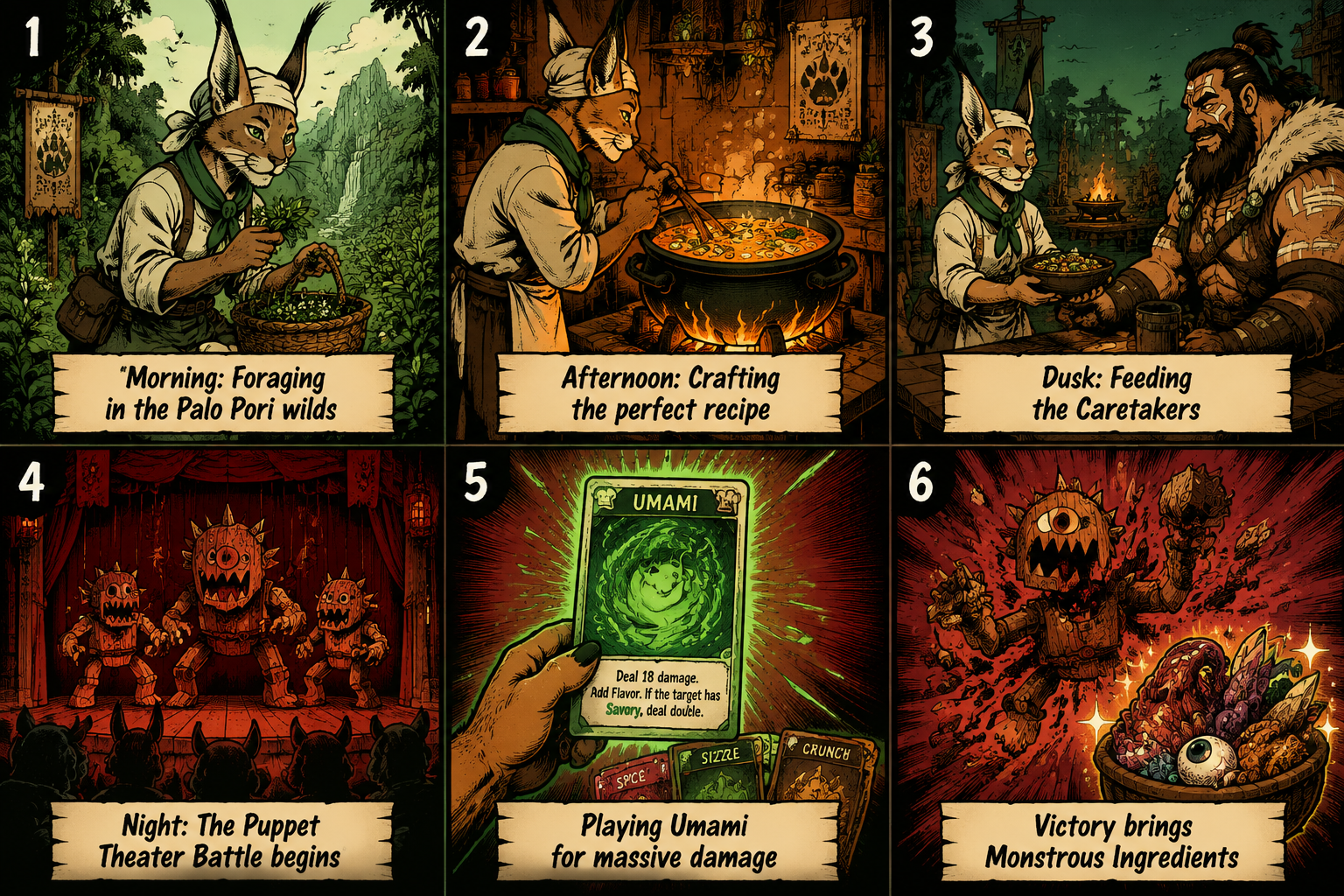
Not all recipes are created equal. While throwing random ingredients into a pot might satisfy a generic villager, Caretakers require optimized, synergistic dishes to survive the wilds. The daily gameplay loop is a rhythm of preparation and execution. In the Morning, you are foraging in the Palo Pori wilds. By the Afternoon, you are crafting the perfect recipe in your kitchen. At Dusk, you are feeding the Caretakers. Finally, at Night, the Puppet Theater Battle begins. Playing Umami for massive damage is satisfying, and every victory brings Monstrous Ingredients back to your pantry to cook even stronger meals the next day.
If you want to dominate the mid-to-late game, these are the foundational recipes you should be serving:
| Recipe Strategy | Primary Flavor | Secondary Flavor | Key Combat Effect |
|---|---|---|---|
| Conedor Spiky Stew | Umami (Green) | Salty (Blue) | Guaranteed chip damage via Spiky effect. |
| Sour Spirit Glazed Shiitake | Umami (Green) | Sour (Yellow) | Applies stacking poison damage over time. |
| Bubblizard Salty Broth | Salty (Blue) | Sweet (Pink) | Generates persistent shields for duo fights. |
The Conedor Spiky Stew is arguably the most reliable meal for consistent damage. Thanks to recent balance adjustments in Patch 1.0.5, the Conedor Spiky effect will activate regardless of whether you win or lose the trick. This is a massive tactical advantage. Even if the monster out-draws you, they still take retaliatory damage, making this meal perfect for whittling down high-health brutes.
The Sour Spirit Glazed Shiitake leans heavily into the rule that Sour enhances Umami. The poison added to cards from the Sour Spirit now actively damages the enemy and has a high chance to apply poison stacks. When paired with Umami's naturally high base attack, this meal creates a devastating burst-and-bleed deck.
The Bubblizard Salty Broth is your ultimate defensive tool. Similar to the Spiky effect, the Bubblizard shield effect activates regardless of winning or losing the trick. When you are facing multiple enemies in a duo fight, mitigating incoming damage is far more important than dealing it. This salty-sweet combo ensures your Caretaker stays standing.
Flavor Synergies: Matching Meals to Caretakers (Oyshi, Kalan, and Beyond)
You cannot force a meta deck onto a Caretaker who hates the ingredients. Each champion in Palo Pori hails from a different flavor region and has a distinct palate that heavily influences their base deck and passive abilities. The best combat meals Beastro offers are those tailored specifically to the Caretaker eating them.
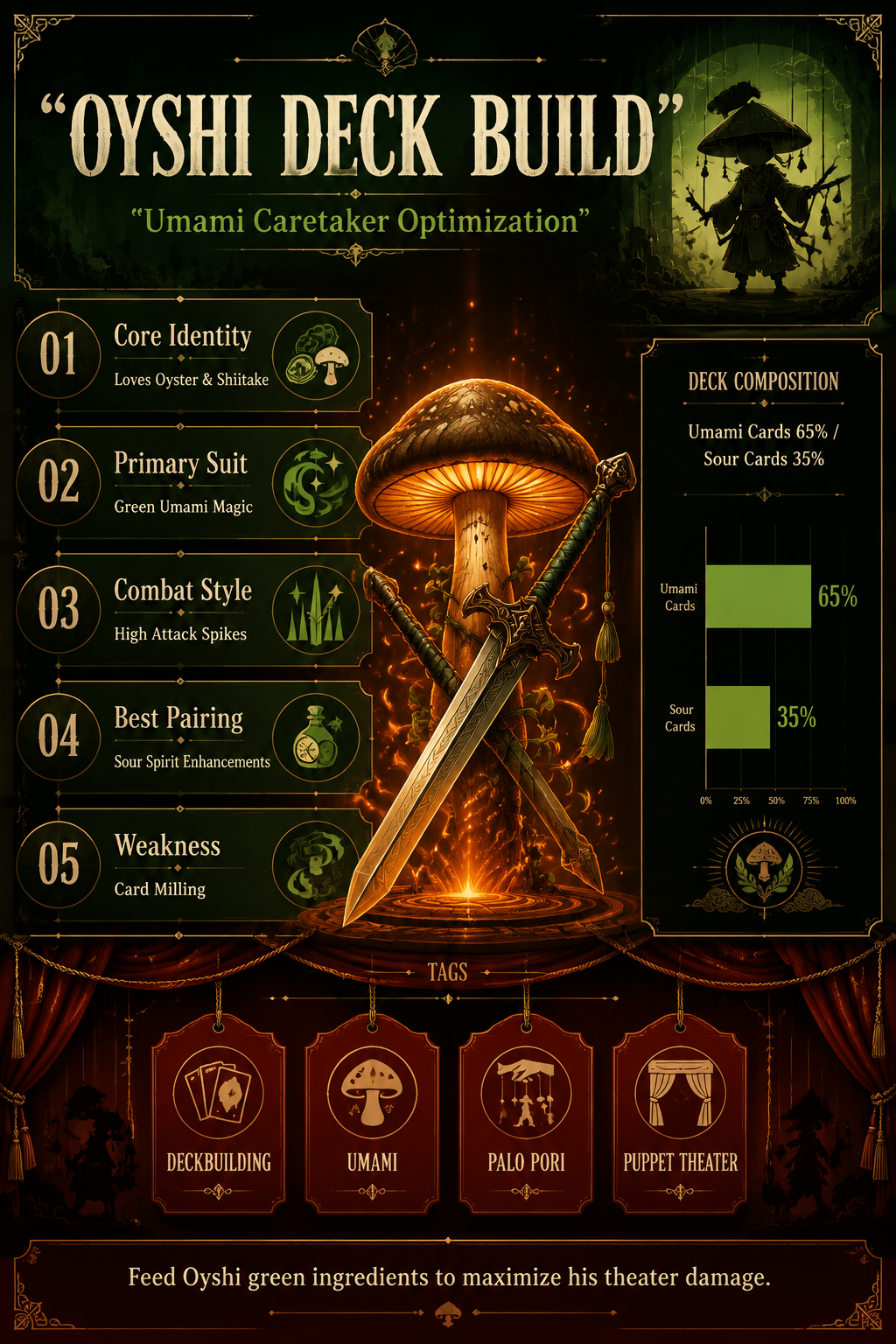
Oyshi is your Umami Caretaker. As a gentle soul who loves animals, he demands Oyster and Shiitake mushrooms. His deck thrives on Green Umami Magic, resulting in High Attack Spikes that can burst down early-game monsters. The Best Pairing for him is Sour Spirit Enhancements, which add poison stacks to his raw damage. However, his main Weakness is Card Milling if the battle drags on past his initial burst. If you feed Oyshi a deck full of Bitter or Sweet ingredients, his synergy breaks, and he will struggle to win tricks.
Kalan, the Bitter Caretaker, is a completely different beast. Encountered alone in the wilds, he is proud, independent, and resistant to help. Winning him over requires patience and a deep understanding of his mechanical needs. Kalan's combat style is a war of attrition. His passive effect gives a 50% chance of giving stamina for the card that was discarded. This is arguably the strongest passive in the game, as it actively works to avoid late-game milling back to full health. To maximize Kalan, you must feed him Bitter meals that neutralize enemy magic, allowing him to drag the fight out until his passive generates an insurmountable card advantage.
Late-Game Deckbuilding: Crafting the Best Combat Meals in Beastro for Phase 2 Bosses
The true test of your culinary deckbuilding arrives at the end of the game. The Final Boss is a brutal gear-check, and the recent 1.0.5 patch adjusted the monster pool for Phase 2 to add a severe challenge. The boss now boasts a devastating attack value of 10. If you attempt to brute-force this encounter with pure Umami aggression, your Caretaker will be wiped out in two tricks.
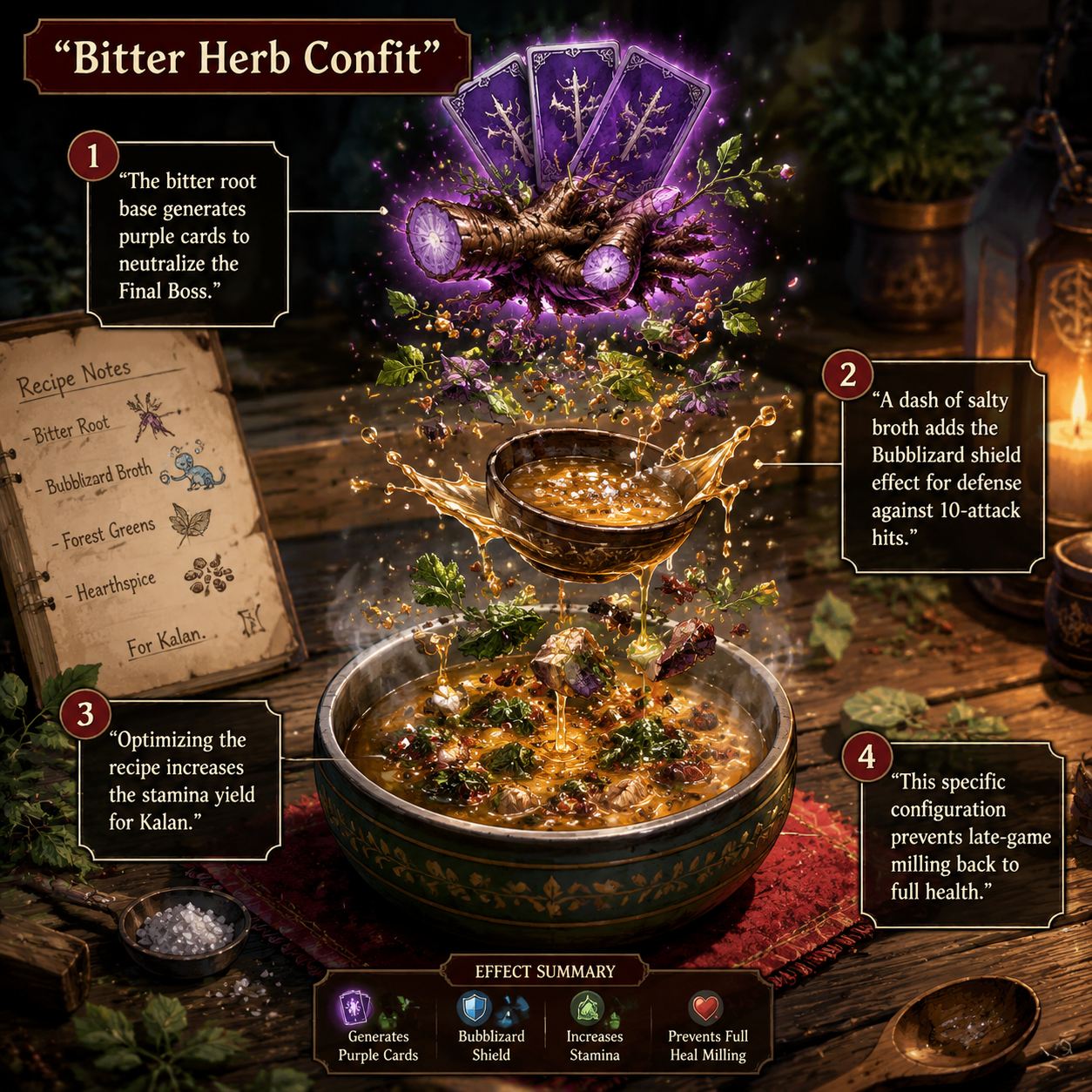
To survive the Final Boss Phase 2, which boasts a devastating attack value of 10, you need the Bitter Herb Confit. This meal relies on a bitter root base to generate purple cards to neutralize the Final Boss. A dash of salty broth adds the Bubblizard shield effect for defense against 10-attack hits. Optimizing the recipe increases the stamina yield for Kalan. This specific configuration prevents late-game milling back to full health, a fatal error when the boss is one trick away from defeat.
Cooking meals of this caliber requires premium ingredients, which means you need a thriving restaurant to fund your farming. Don't neglect your establishment's appeal. Placing the Sword in Stone counter decoration grants +25 appeal, and properly setting your Today's Special grants another +25 appeal. The more villagers you attract, the more resources you generate to buy the rare bitter roots and salty broths required for endgame boss meals.
Frequently Asked Questions (FAQ)
How many flavor suits should I include in a single combat meal? Stick to two complementary flavors (e.g., Umami and Sour, or Salty and Bitter). Adding three or more flavors dilutes the Caretaker's deck, making it impossible to reliably follow suit or build combos during the trick-taking phase.
Why are my Caretakers running out of cards during boss fights? This is known as card milling. If a battle goes on too long, the Caretaker runs out of stamina and cards, forcing a reset. To prevent this, use Kalan's passive ability or ensure you are cooking meals with high-quality, slow-cooked ingredients that yield higher stamina.
Do restaurant decorations actually affect combat? Indirectly, yes. Decorations like the Sword in Stone increase your restaurant's appeal. Higher appeal brings in more customers, which generates the currency needed to purchase premium seeds. Better seeds grow into the high-tier ingredients required to craft the strongest combat cards.
What happens if I feed a Caretaker a flavor they dislike? They will still go into battle, but their base passive abilities won't trigger optimally, and the resulting deck will lack synergy. Always build around a Caretaker's primary flavor preference.
Sources
Mechanics and balance data referenced in this guide reflect the Beastro v1.0.5 patch notes provided by Timberline Studio via the Steam Community hub. Caretaker background lore and flavor pairings are sourced from in-game database entries and official developer deckbuilding blogs.