Stop blindly swinging your spatula. If you want to build a sprawling dungeon-food empire without wasting hours on low-yield recipes, you need the definitive monster ingredients list Chef Knight demands. Knowing exactly which creatures drop what items is the only way to optimize your kitchen, scale your incremental progression, and extract maximum gold from the local goblin population.
Developed by Clover Bite—the indie incubator famous for GRIME—Chef Knight wears its Dungeon Meshi inspirations on its sleeve. You play as a heavily armored culinary warrior diving into procedurally generated depths, where every enemy is just an uncooked meal waiting for the right chef. But as you push deeper into the dungeon, the game’s cozy exterior gives way to a ruthless economy. You cannot afford to guess which floor holds the exact components for your high-tier dishes. This guide breaks down every drop, every recipe, and every combat strategy you need to dominate the food chain.
Why You Need a Complete Monster Ingredients List in Chef Knight
The core loop of Chef Knight is deceptively simple: slay, cook, sell, and upgrade. However, the incremental math working under the hood is punishing if you lack focus. Every second you spend in the dungeon drains your Dungeon Endurance meter. If you waste that time fighting enemies that drop low-value components, you will return to your kitchen with a subpar haul.
Your customers—a highly impatient goblin population—demand specific dishes. Feeding them Basic Mushroom Soup on Floor 20 is a fast track to bankruptcy. To afford the massive gold costs of the late-game skill tree, you must target specific monsters for their high-yield drops. A targeted approach allows you to sequence your cooking efficiently, ensuring that your stoves are always brewing exquisite delicacies rather than humble broths. Tracking the exact monster ingredients list in Chef Knight transforms you from a frantic button-masher into a calculated dungeon gastronome.
Early-Game Monster Ingredients List: Chef Knight Floors 1–15
The first fifteen floors of the dungeon are your culinary training grounds. Here, you will learn the basics of dodging, striking, and harvesting. The enemies are relatively slow, but their drops form the foundation of your early restaurant economy.
| Monster | Primary Drop | Secondary Drop | Optimal Dish | Base Value |
|---|---|---|---|---|
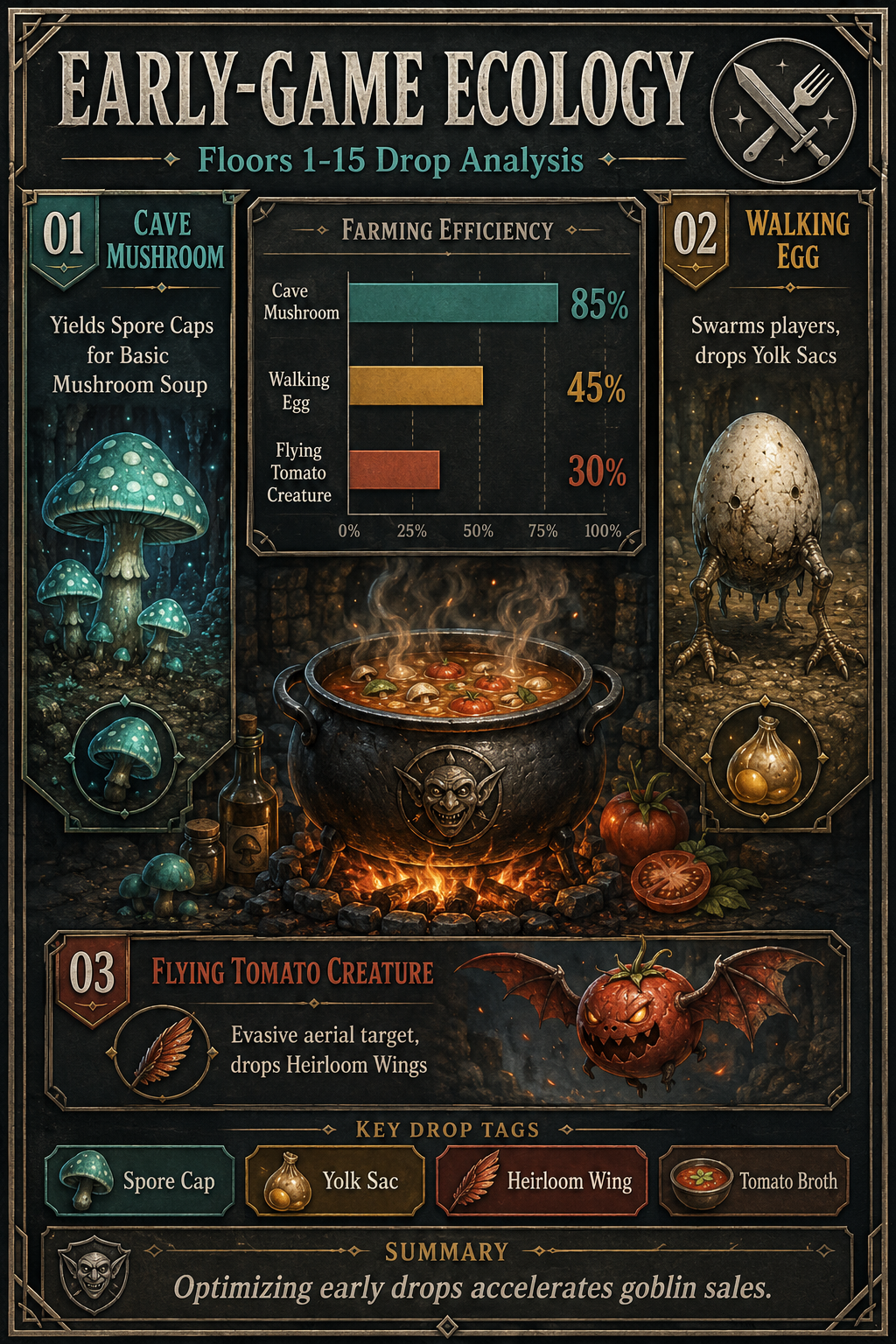
| Cave Mushroom | Spore Cap | Fungal Stem | Basic Mushroom Soup | 15 Gold |
| Walking Egg | Yolk Sac | Shell Shard | Dungeon Omelet | 25 Gold |
| Flying Tomato Creature | Heirloom Wing | Acidic Seed | Tangy Tomato Broth | 40 Gold |
Cave Mushroom The Cave Mushroom is the first enemy you encounter and serves as a stationary DPS check. While they do not move, they emit a toxic spore cloud every three seconds. The optimal strategy is to bait the cloud, step back, and strike during the cooldown. They reliably drop Spore Caps and Fungal Stems. You will use these exclusively for Basic Mushroom Soup to fund your initial attack power upgrades.
Walking Egg Do not let their comical appearance fool you. Walking Eggs travel in erratic packs of four to six, attempting to swarm the player and stunlock you through sheer numbers. They have incredibly low HP, making them perfect fodder for sweeping attacks. Upon death, they drop Yolk Sacs and Shell Shards. Combining these yields the Dungeon Omelet, your first recipe that requires a secondary ingredient, offering a solid 25 Gold per serving.
Flying Tomato Creature This is the first enemy that will test your patience. Flying Tomato Creatures move in evasive sine-wave patterns, requiring you to time your vertical hitboxes perfectly. If your attack speed is too low, they will dodge your strikes entirely. Grounding them rewards you with Heirloom Wings and Acidic Seeds. The resulting Tangy Tomato Broth is the most lucrative dish of the early game, providing the capital needed to push past Floor 15.
Mid-Game Monster Ingredients List: Chef Knight Floors 16–30
Once you breach Floor 16, the dungeon biomes shift from dusty stone corridors to flooded aqueducts and overgrown fungal caverns. The monsters here possess actual defensive mechanics, requiring you to upgrade your culinary weapons to crack their armor.
| Monster | Primary Drop | Secondary Drop | Optimal Dish | Base Value |
|---|---|---|---|---|
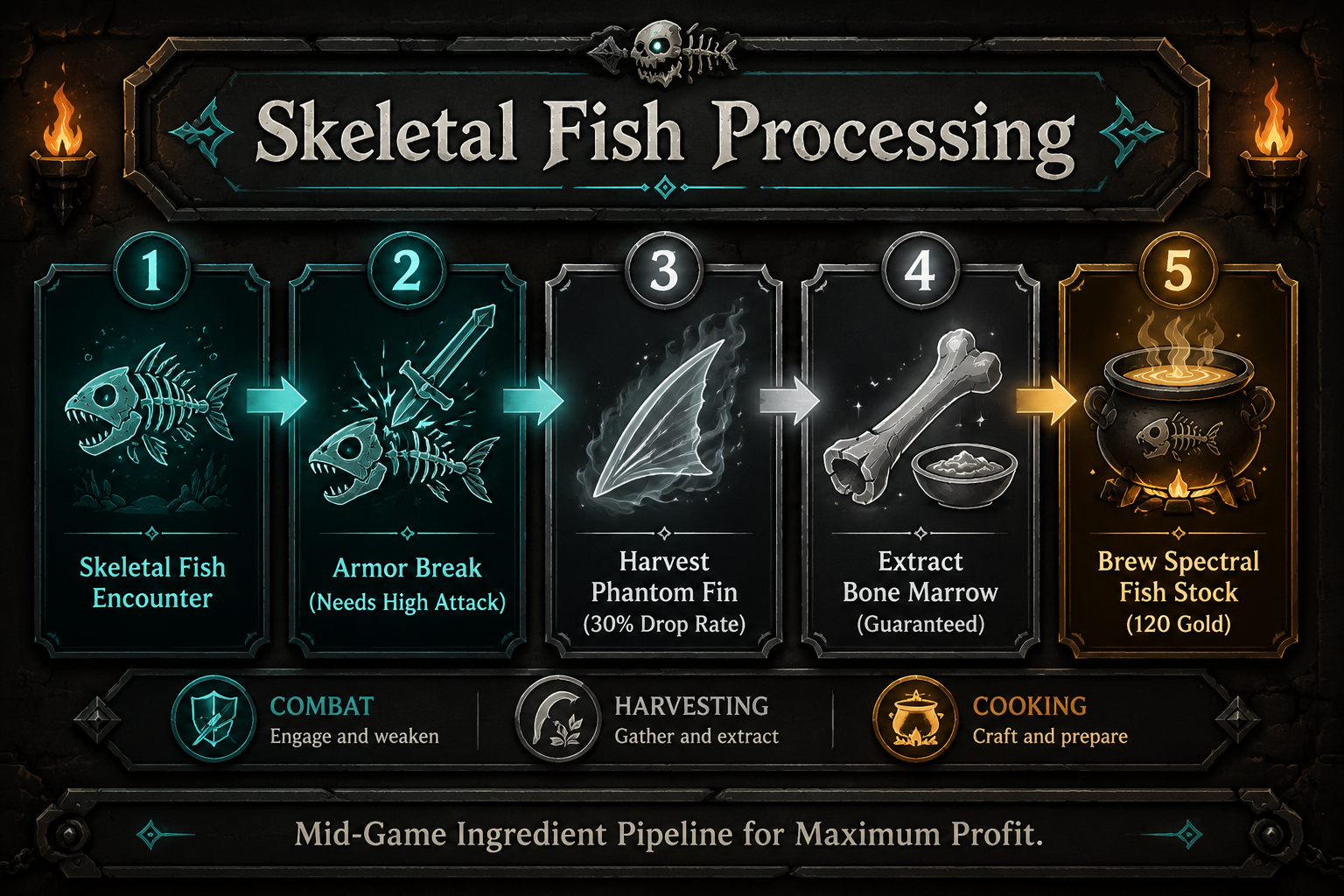
| Skeletal Fish | Phantom Fin | Bone Marrow | Spectral Fish Stock | 120 Gold |
| Dungeon Truffle Boar | Truffle Snout | Marbled Flank | Truffle-Infused Roast | 185 Gold |
| Venomous Slime | Gelatinous Cube | Toxic Core | Slime Jelly Dessert | 250 Gold |
Skeletal Fish Patrolling the flooded sections of the mid-game, the Skeletal Fish is a nightmare for under-leveled chefs. Their innate bone armor negates the first two hits of any standard attack. You must rely on high base attack power to shatter their defenses. Once broken, you have a 30% chance to harvest a Phantom Fin, alongside guaranteed Bone Marrow. These components are essential for brewing Spectral Fish Stock, a dish that sells for a massive 120 Gold and single-handedly funds your mid-game skill tree.
Dungeon Truffle Boar These beasts announce their presence with a telegraphed charge attack that covers half the screen. A dodge roll is mandatory here; face-tanking a Truffle Boar will instantly end your run. Sidestep their charge and strike their exposed flanks to harvest Truffle Snouts and Marbled Flanks. The Truffle-Infused Roast takes longer to cook than broths, but the 185 Gold payout makes the wait worthwhile.
Venomous Slime Slimes are the ultimate test of your crowd-control capabilities. Upon death, a large Venomous Slime splits into three smaller variants, leaving toxic trails across the arena floor. You must purify their drops at the kitchen workstation to safely use them. Combining a Gelatinous Cube with a purified Toxic Core creates the Slime Jelly Dessert. The goblin population considers this a rare delicacy, happily paying 250 Gold per plate.
Late-Game Monster Ingredients List: Chef Knight Depths 31+
The abyssal depths of the dungeon are reserved for players who have fully optimized their cooking efficiency and combat stats. The monsters here are essentially mini-bosses, and their drops are required to unlock the final nodes of the skill tree.
| Monster | Primary Drop | Secondary Drop | Optimal Dish | Base Value |
|---|---|---|---|---|
| Basilisk | Petrification Gland | Scaly Meat | Basilisk Tail Skewers | 800 Gold |
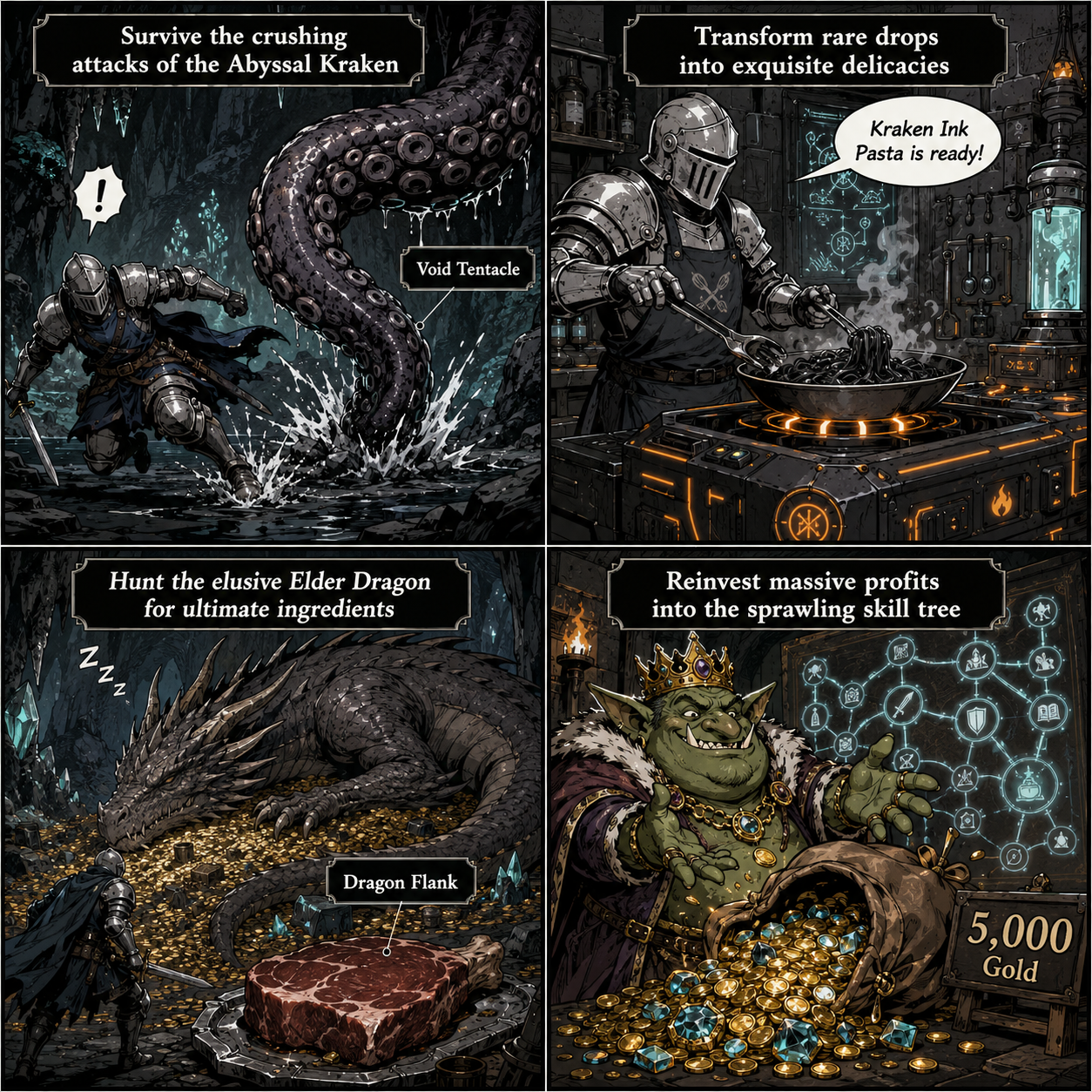
| Abyssal Kraken | Void Tentacle | Ink Sac | Kraken Ink Pasta | 1,500 Gold |
| Elder Dragon | Dragon Flank | Ember Pepper | Dragonfire Steak | 5,000 Gold |
Basilisk The Basilisk forces you to rethink your entire approach to combat. Its constant petrification gaze slows your movement speed to a crawl if you face it directly. You must fight using hit-and-run tactics, striking only when its back is turned, or by utilizing reflective cookware unlocked late in the game. Harvesting its Petrification Gland and Scaly Meat allows you to grill Basilisk Tail Skewers, a high-tier dish that easily clears 800 Gold.
Abyssal Kraken Found in the underground lakes of Floor 40, the Abyssal Kraken is a stationary boss that attacks with six massive tentacles. You have to sever the tentacles one by one while dodging its crushing AoE slams. Surviving the encounter nets you Void Tentacles and Ink Sacs. Back in the kitchen, transforming these rare drops into Kraken Ink Pasta yields an astonishing 1,500 Gold per serving, allowing you to buy the most expensive kitchen upgrades.
Elder Dragon The apex predator of the current build. The Elder Dragon is a grueling endurance fight that tests every upgrade you have purchased. You must manage your Dungeon Endurance meter perfectly to outlast its fiery breath attacks. Taking down this behemoth rewards you with the legendary Dragon Flank and Ember Peppers. The resulting Dragonfire Steak is the game's ultimate culinary achievement, commanding a staggering 5,000 Gold from the wealthiest goblin kings.
Weapon Upgrades and Harvesting Efficiency
Knowing the drops is only half the battle; you also need the right tools to extract them efficiently. As you accumulate wealth from your restaurant, you must reinvest heavily into the sprawling skill tree. While passive buffs to cooking speed and Dungeon Endurance are vital, your primary focus should be unlocking advanced culinary weapons.
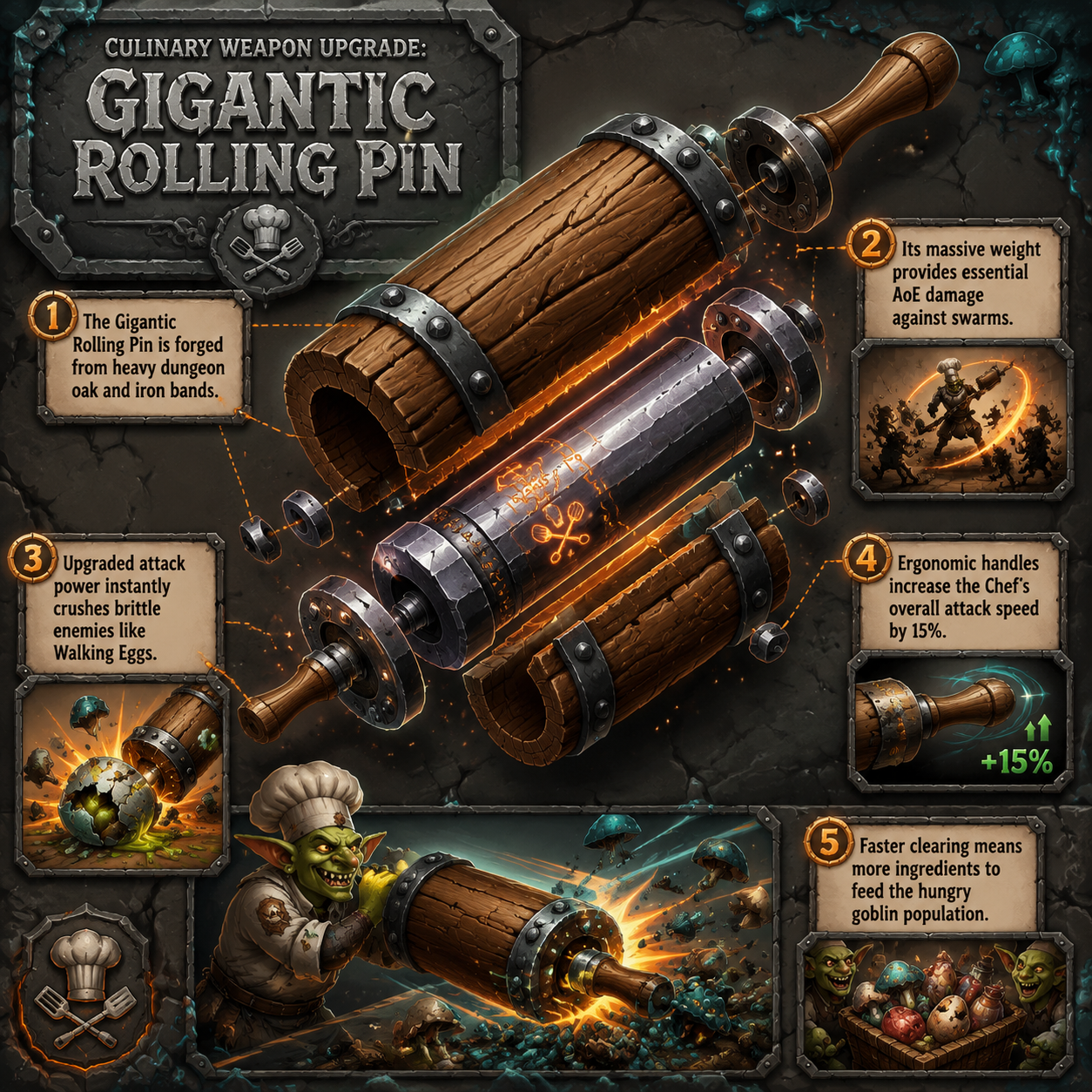
The most critical mid-game unlock is the Gigantic Rolling Pin. Forged from heavy dungeon oak and reinforced with iron bands, this weapon fundamentally changes how you handle crowds. Its massive weight provides essential AoE damage, allowing you to instantly crush brittle swarm enemies like Walking Eggs in a single swing. Furthermore, purchasing the ergonomic handle upgrades for the rolling pin increases your overall attack speed by 15%. Faster clearing in the dungeon means a higher volume of ingredients, which directly translates to feeding the hungry goblin population faster and skyrocketing your profit margins. Do not hoard your gold—spend it immediately on weapon tiers to keep your harvesting efficiency ahead of the dungeon's scaling difficulty.
FAQ: Monster Ingredients List Chef Knight
What is the highest selling dish in Chef Knight? Currently, the Dragonfire Steak is the most lucrative recipe in the game. Crafted from the Dragon Flank and Ember Peppers dropped by the Floor 50 Elder Dragon, it has a base value of 5,000 Gold. With maxed-out cooking efficiency multipliers, this dish can sell for significantly more.
How do you unlock the Gigantic Rolling Pin? The Gigantic Rolling Pin is unlocked via the combat branch of the skill tree. You must first serve 500 total customers in your restaurant to unlock the second tier of the weapon tree, then pay 2,500 Gold to forge the pin.
Do monster drops scale with dungeon depth? Yes. While you can find Cave Mushrooms on Floor 20, they have a slightly higher chance to drop premium Fungal Stems compared to the variants on Floor 1. However, it is always more time-efficient to hunt the highest-tier monsters you can comfortably kill rather than farming low-level enemies for fractional drop rate increases.
Is Chef Knight officially related to Dungeon Meshi? No. While the developers at Clover Bite have explicitly cited the anime and manga Delicious in Dungeon (Dungeon Meshi) as the primary inspiration for the game's "cook what you kill" aesthetic, Chef Knight is an entirely original IP with its own unique lore, monsters, and incremental mechanics.