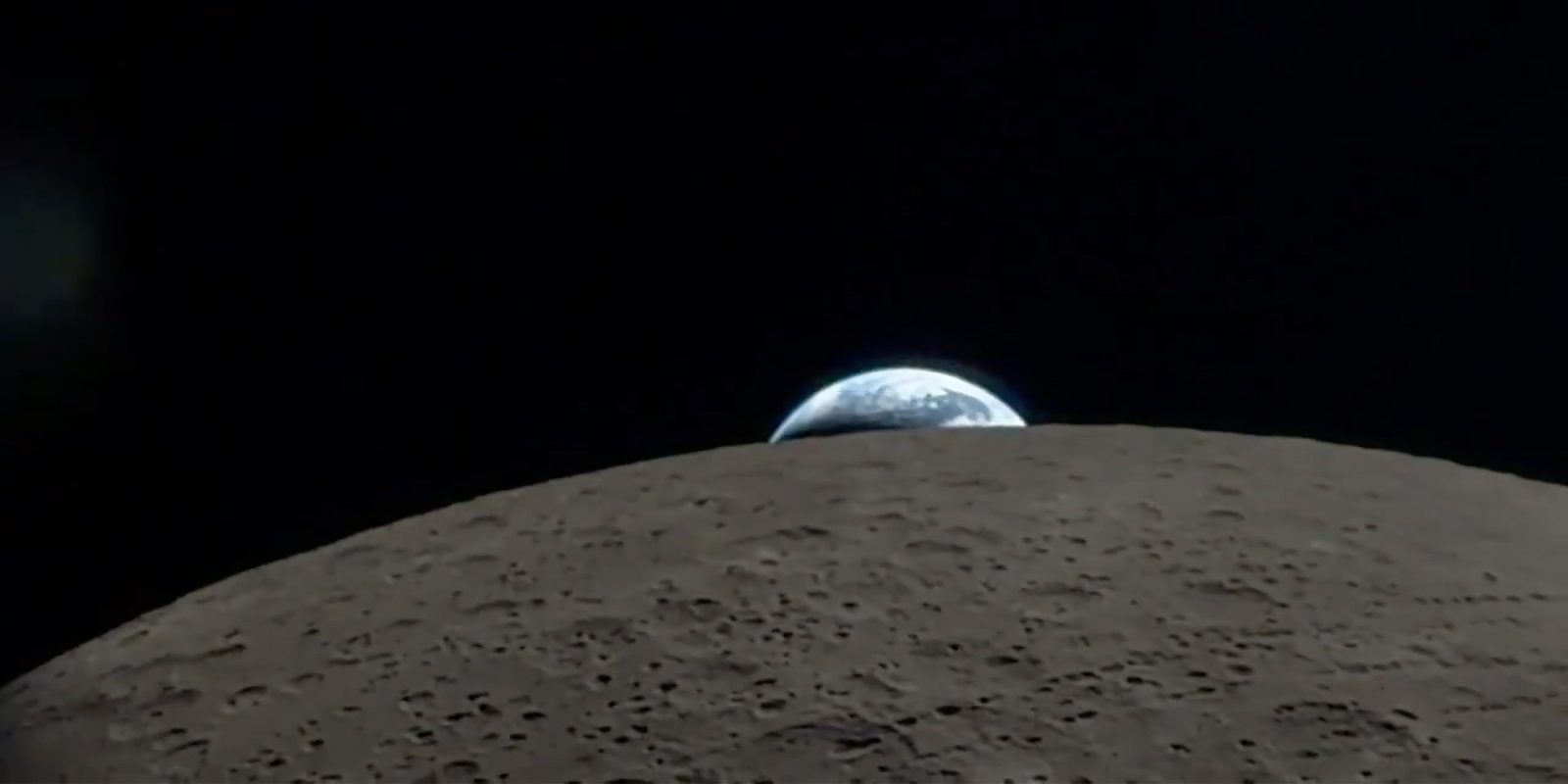
A breathtaking glimpse of Earth, bathed in its own reflected light, captured not by a specialized scientific instrument, but by an iPhone aboard NASA’s Orion spacecraft during the Artemis II mission. This extraordinary footage of "Earthshine" isn't just a testament to humanity's ongoing journey back to the Moon; it’s a powerful illustration of how far consumer-grade technology has come. It also subtly underscores a critical need in our increasingly visual world: the ability to not just capture, but optimize and enhance every pixel, ensuring maximum clarity and impact. Whether it’s a celestial phenomenon or a product shot, the raw capture is often just the beginning of crafting a truly compelling visual story.
The Cosmic Lens: iPhone's Role in Space and the Democratization of High-Quality Imagery
The image of an iPhone floating inside the Orion capsule, recording the delicate glow of Earthshine, is more than just a novelty; it represents a significant shift in how we approach visual documentation, even in the most extreme environments. For decades, space photography relied exclusively on highly specialized, often bulky, and incredibly expensive equipment. While such instruments still play a vital role in scientific data collection, the inclusion of an iPhone speaks volumes about the remarkable advancements in commercial off-the-shelf (COTS) technology.
This isn't the first time consumer cameras have made their way into space. From astronauts using Hasselblads on Apollo missions to digital DSLRs on the ISS, there’s a long history of adapting readily available tech. However, an iPhone on a deep-space mission like Artemis II signals a new era. Modern smartphones pack an astonishing array of sensors, powerful processors, and sophisticated computational photography algorithms into a pocket-sized device. They are designed to perform well in diverse lighting conditions, manage dynamic range, and stabilize footage—qualities that are surprisingly beneficial even in the vacuum of space, where lighting can range from blinding sunlight to the absolute darkness of shadow.
 NASA Artemis II Earthset
The implications extend far beyond space exploration. The fact that a device many of us carry daily can capture such significant, high-quality footage from a quarter-million miles away democratizes access to sophisticated imaging capabilities. It means that high-quality visual content is no longer solely the domain of professional studios or government agencies. From independent filmmakers and content creators to small businesses and e-commerce entrepreneurs, the barrier to entry for creating visually impactful material continues to drop. This trend places a greater emphasis not just on what can be captured, but how that captured content is subsequently processed and presented to tell its story effectively.
Beyond the Capture: Enhancing Celestial Views (and More) with AI
While the iPhone's raw footage from Orion is undoubtedly impressive, the unique challenges of space photography—extreme low light, harsh contrasts, potential lens flares, and the vastness of the environment—mean that even the best raw capture can benefit immensely from post-processing and enhancement. This is where AI-powered image and video enhancement tools become indispensable, not just for NASA’s scientists but for anyone seeking to elevate their visual content.
Consider the Earthshine video: capturing the faint reflected light of Earth illuminating the Orion cabin is a feat in itself. However, such footage is often susceptible to noise, compression artifacts, and a limited dynamic range that might obscure subtle details. AI enhancement algorithms are specifically designed to address these issues. They can intelligently reduce visual noise without sacrificing detail, sharpen soft edges, correct color imbalances, and even upscale resolution, making the footage clearer, more vibrant, and more engaging.
For scientific and public outreach purposes, the ability to enhance these visuals is paramount. Scientists might need to zoom in on specific areas of the Orion capsule or the Earth's limb, requiring pristine clarity. Public audiences, watching on various screens, benefit from visuals that are as crisp and compelling as possible to truly grasp the wonder of what they’re seeing. Tools that offer AI video enhancement and AI image enhancement can transform raw, potentially noisy or underexposed footage into stunning, high-definition assets that communicate more effectively.
Furthermore, the ability to isolate subjects is crucial. Imagine wanting to focus solely on the Earthshine phenomenon or the intricate details of the Orion capsule against the backdrop of space. While not directly applied to this particular video, BgRemovit’s background removal capabilities, for instance, could be used to precisely extract the Orion capsule or a specific celestial body from a complex background, allowing for focused analysis or integration into other visual compositions. This level of precision is invaluable in fields ranging from scientific visualization to commercial product photography, where the subject must stand out without distraction.
These AI tools don't just fix imperfections; they unlock new possibilities. They allow creators to push the boundaries of what's achievable with their source material, making every pixel count. Whether it's restoring details in a dimly lit space shot or perfecting the lighting in an e-commerce product photo, the underlying AI principles are about intelligent analysis and precise manipulation to achieve optimal visual quality.
The Future of Visual Storytelling: From Orbit to Online
The journey of visual content, from its capture by an iPhone in orbit to its eventual consumption by millions worldwide, perfectly encapsulates the evolving landscape of visual storytelling. In an age dominated by screens and immediate gratification, the quality and impact of visual information are more critical than ever. It's not enough to simply record an event; the goal is to create an immersive, crystal-clear experience that resonates with the viewer.
AI is at the forefront of this transformation. Beyond enhancement and background removal, AI is increasingly enabling the creation of entirely new visual content, such as AI model photo generation and virtual try-on experiences. These applications, while seemingly distinct from space photography, share a common thread: the pursuit of hyper-realistic, engaging, and high-quality visuals that push the boundaries of what’s possible. They allow businesses to create diverse marketing materials with ease, offer personalized shopping experiences, and reduce the logistical complexities of traditional photography.
The NASA iPhone video serves as a powerful reminder that the best technology, whether a spacecraft or a smartphone, is only as good as the output it produces and how effectively that output can be utilized. As AI continues to advance, the gap between raw capture and polished, impactful visual content narrows, empowering everyone from space agencies to small businesses to tell their stories with unparalleled clarity and visual appeal. The future of visual communication is one where AI acts as a co-pilot, ensuring that every image and video, no matter its origin, achieves its full potential.