In the brutal, low-poly prehistoric world developed by NEXTINDIE, survival alone isn't enough to ascend the food chain. If you want to unlock higher-tier predators, you must master the nesting mechanics Mesozoic Dawn uses as its core progression engine. Instead of grinding traditional XP bars, players must gather resources, manage their dinosaur’s internal organ health, and successfully incubate eggs to trigger leapfrog species iteration. This guide breaks down exactly how the "Growth + Nesting = Evolution" system works, why environmental temperature dictates your offspring's gender, and what it takes to protect your bloodline from apex threats.
For years, the multiplayer dinosaur survival genre has relied on passive growth systems. Titles like The Isle or Path of Titans often reward players simply for staying alive in a bush while a timer ticks up. Mesozoic Dawn shatters this passive loop by forcing players to actively participate in the ecosystem. You cannot reach the endgame by hiding; you must breed.
Why the Nesting Mechanics Mesozoic Dawn Features Changed the Survival Genre
The fundamental shift in NEXTINDIE's design philosophy is the complete removal of tedious XP bars. In their place is the "Egg-Laying Evolution" system. To unlock the game's roster of over 40 playable creatures—which currently spans from the agile Deinonychus to the fearsome Utahraptor, Dakotaraptor, and Southern Raptor—players must successfully rear the next generation.
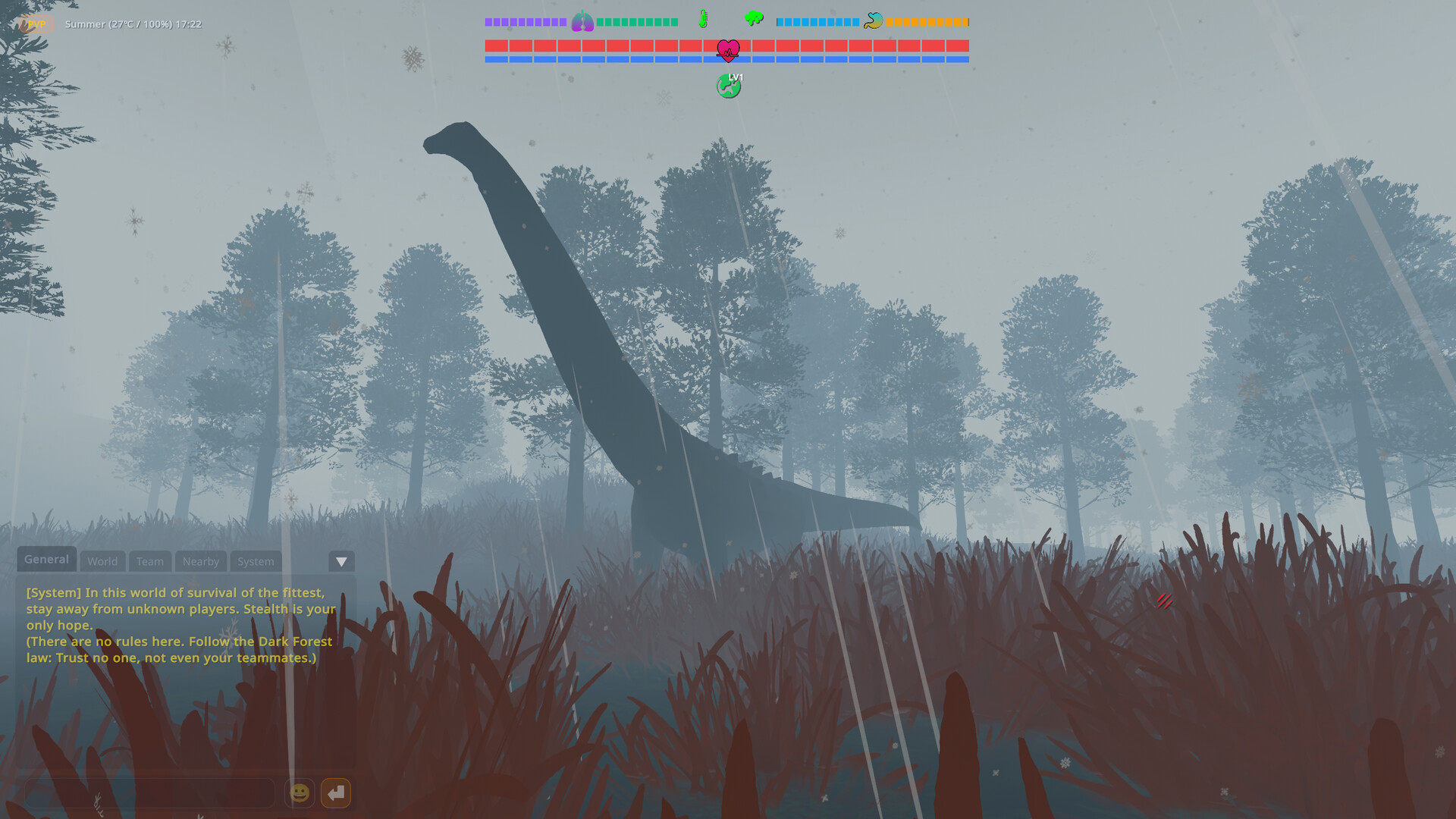
This design transforms the mid-game from a waiting room into a high-stakes escort mission for your own genetics. Because the game explicitly warns players, "Don't trust anyone or make noises easily," the act of settling down to build a nest becomes the most dangerous decision you will make. Your companion might turn covetous, or the noise of gathering stones and wood might attract a roaming pack of carnivores. By tying species progression directly to the vulnerability of the nest, the developers have created a gameplay loop where evolution feels earned rather than inevitably granted.
The "Growth + Nesting = Evolution" Formula Explained
To understand how to climb the prehistoric ladder, you must internalize the core formula: Growth + Nesting = Evolution. It is not a linear path, but a cyclical one of leapfrog species iteration.
Here is how the cycle operates in practice:
- Vulnerable Juvenile Phase: You spawn as a low-tier juvenile. Your immediate goals are purely survival-based—finding water, securing low-risk food sources, and avoiding larger players.
- High-Nutrient Foraging: As you grow, your dietary needs shift. To prepare for the egg-laying phase, your dinosaur must consume high-nutrient food. A poor diet leads to organ stress, which we will cover later, directly impacting your ability to breed.
- The Nesting Phase: Once adulthood is reached and nutritional requirements are met, the actual nesting mechanics begin. You cannot simply drop an egg anywhere; you must construct a physical lair.
- Species Iteration: Upon the successful incubation and hatching of the egg, the player is granted access to a more powerful, advanced prehistoric apex predator for their next spawn.
This system ensures that the island's apex predators are populated only by players who have proven their mastery over the game's survival and territorial defense mechanics.
Step-by-Step: Mastering the Nesting Mechanics Mesozoic Dawn Demands
Building a nest is a deliberate, multi-step process that requires situational awareness and resource management. The built-in mini-map provides icons for refresh points, but finding the right location for your lair is entirely on you.
1. Gathering Materials
Unlike games where a nest simply spawns at your feet with the press of a button, Mesozoic Dawn requires physical construction. Players must scour the environment to gather stones and wood. This exposes you to the open. Carrying materials limits your mobility and makes you an easy target for ambush predators like the Dakotaraptor.
2. Choosing the Right Environment
Location is not just about hiding from predators; it is a biological imperative. The environmental temperature of your chosen nesting site directly determines the offspring's gender.
- Warm Climates (Open Plains, Sunlit Coasts): Tend to skew the gender ratio in one direction.
- Cool Climates (Dense Jungles, Shaded Caves): Skew the ratio in the opposite direction.
Why does gender matter? In Mesozoic Dawn, males naturally possess size and combat advantages, making them ideal for players focused on PvP and territorial dominance. Females, conversely, are essential for continuing the bloodline and accessing certain reproductive paths. Choosing where to drop your stones and wood is a strategic decision that dictates your next character's base stats.
3. Incubation and Brooding
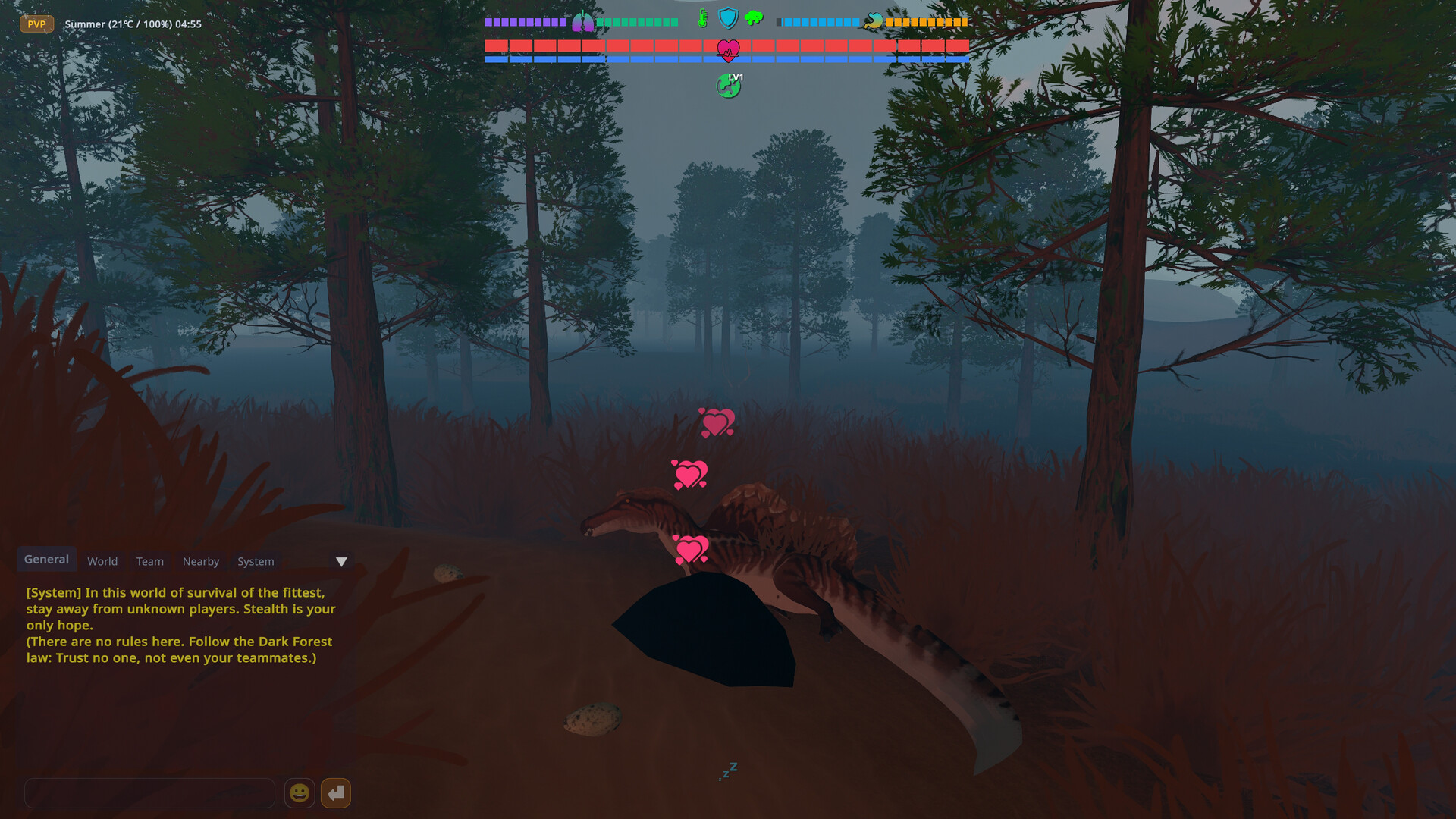
Once the nest is built and the eggs are laid, the brooding phase begins. You must manage the temperature of the nest and protect the eggs from scavengers. The recent 0.5.9.35 update increased the upper limit of eggs for small dinosaurs, meaning lower-tier creatures can rely on numbers to ensure at least one offspring survives the brutal incubation period.
Hardcore Anatomy: How Organ Health Impacts Brooding
One of the most complex layers of the game is its hardcore survival mechanics. Your dinosaur is not just a health bar; it is a biological machine where the stomach, lungs, and heart are intrinsically linked. If you want to succeed at nesting, you must maintain pristine organ health.
Hunger, thirst, stress, or injury directly damage these organs, lowering your energy conversion efficiency.
- Stomach Trauma: If you suffer starvation before nesting, your stomach's conversion efficiency drops. Even if you find food later, your body won't process nutrients fast enough to support healthy egg production.
- Lung and Heart Stress: Gathering wood and stones requires stamina. If your lungs or heart are damaged from a previous fight or environmental stress, your stamina regeneration plummets, leaving you exhausted and vulnerable while building.
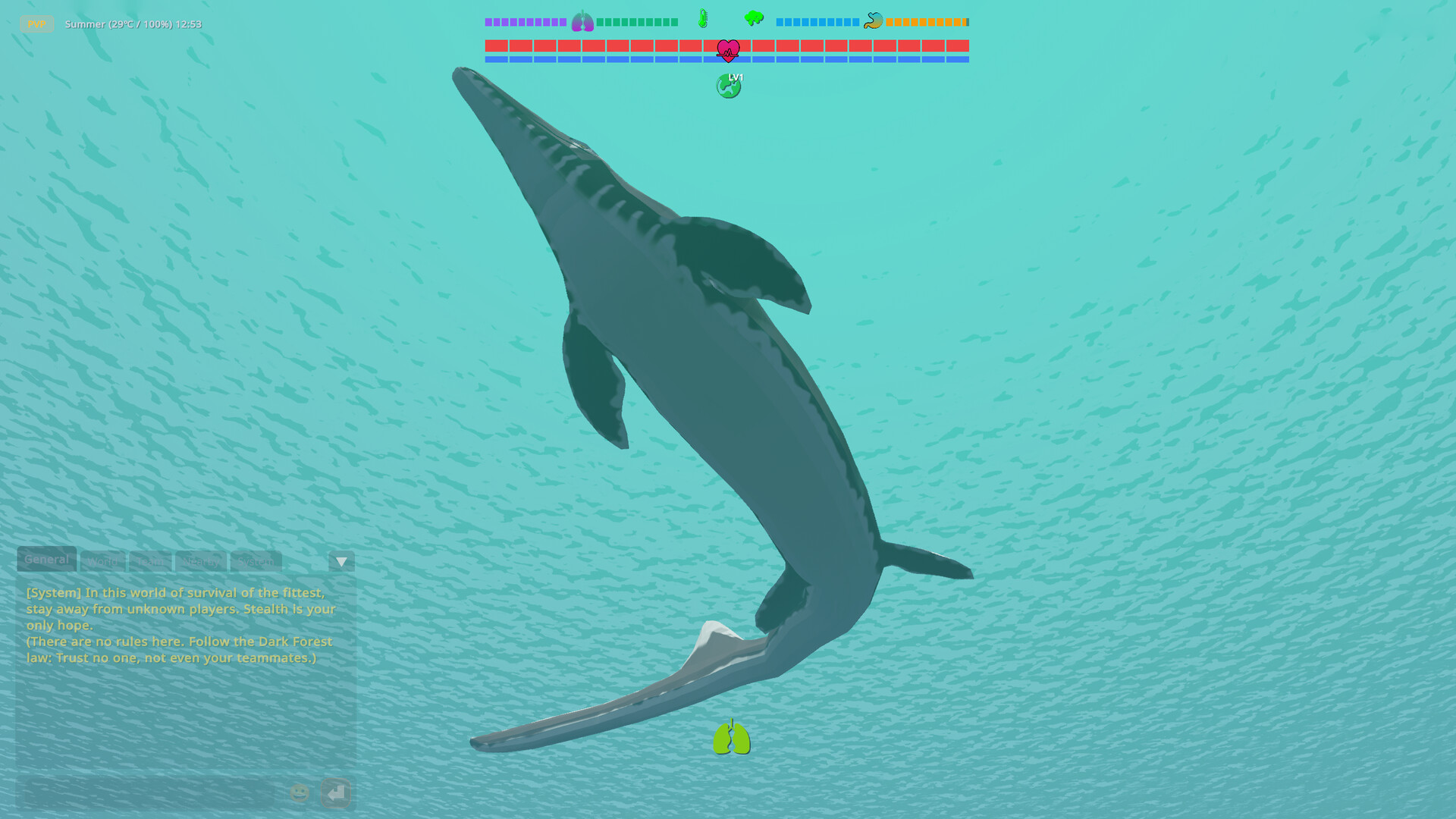
Furthermore, the game features a localized body-part damage system. If a predator strikes your core during a nest defense, the resulting trauma suppresses your health regeneration. You might survive the fight, but the lingering organ damage could make it impossible to gather the remaining nutrients needed to finish brooding.
Asexual vs. Mating: Advanced Nesting Mechanics Mesozoic Dawn Offers
The game offers diverse paths for reproduction, accommodating both solo players and coordinated packs.
The Asexual Path
If you are playing solo and cannot find a trustworthy partner, the game supports asexual reproduction. This allows lone wolves to engage with the "Growth + Nesting = Evolution" system without relying on the game's chat interface or risking betrayal. However, asexual reproduction is merely a baseline. It guarantees progression to the next tier but often lacks the genetic diversity required for top-tier PvP.
The Mating Path
Finding a mate is high-risk, high-reward. By breeding with another player, you open the door to unique genetic combinations. For example, mating can introduce randomly learned genes in sandbox mode, or pass down specific buffs like the highly coveted Scar Gene Effect.
Co-parenting also drastically increases the survival rate of the nest. While one parent gathers high-nutrient food or extra wood, the other can guard the perimeter. In a game where "True Damage" bypasses armor to deplete health directly, having a second massive body to absorb localized damage is the ultimate defense strategy.
Defending the Roost: Combat, Trauma, and True Damage
Eventually, your nest will be discovered. When that happens, the strategic combat system takes center stage. Defending a static location changes the dynamic of Mesozoic Dawn combat entirely. You cannot simply flee; you must stand your ground.
Combat in this game is a tactical duel dictated by skill buffs, attack penetration, and defense toughness. Because of the localized damage system, striking a predator's head yields vastly different damage multipliers than biting its tail.
When defending your eggs, you must leverage True Damage. This mechanic bypasses a heavily armored attacker's defenses to deplete their health directly. More importantly, it accumulates trauma. If you can inflict enough trauma on an invading Utahraptor, you suppress its health regeneration. Even if the predator has intact armor, high trauma leaves them in a hopeless situation, forcing them to abandon the raid or bleed out near your nest.
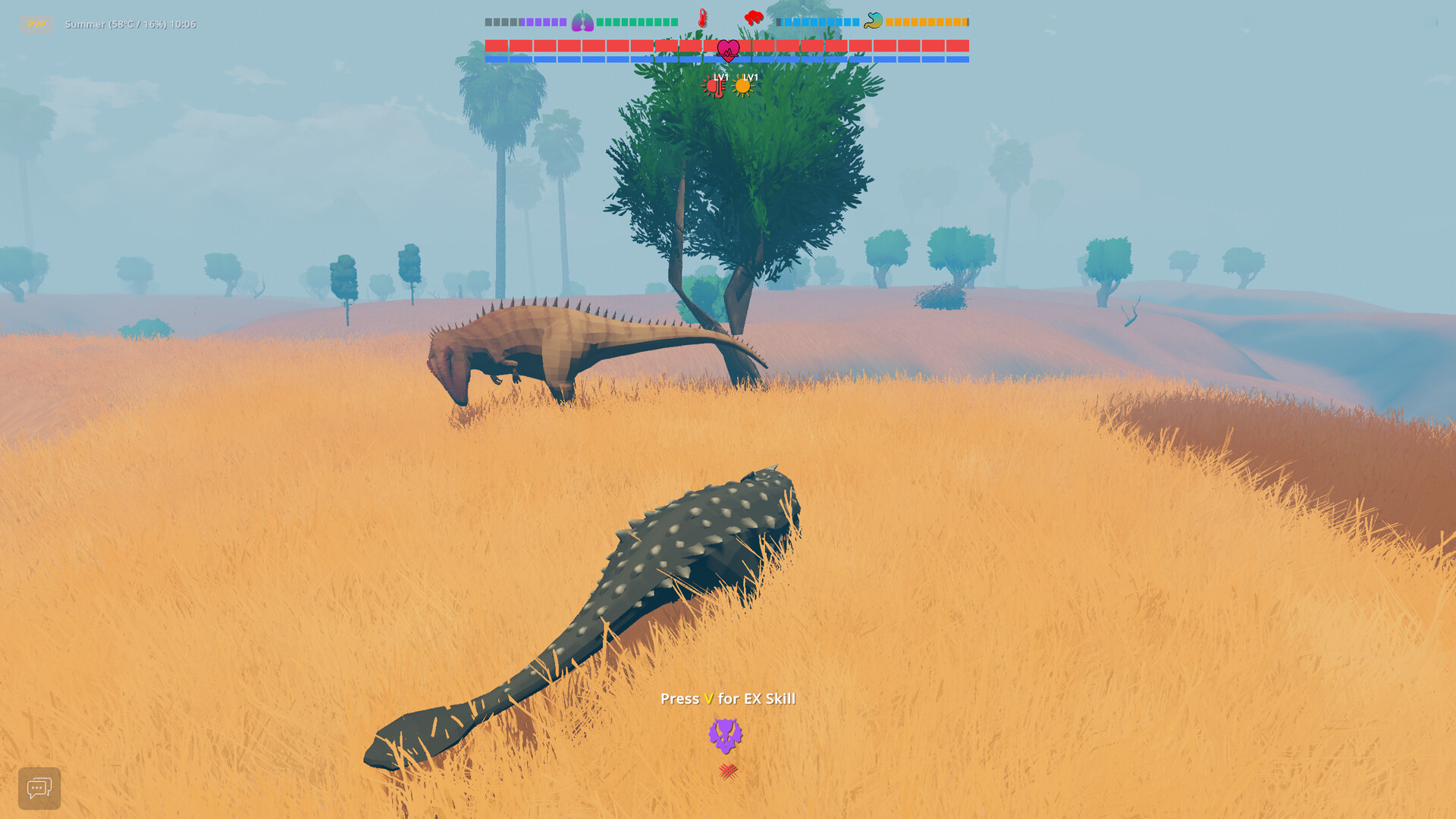
If the defense is successful and the eggs hatch, the miracle of life is realized. You break the chains of your current bloodline, unlocking the next tier of prehistoric apex predators, and the cycle of leapfrog species iteration begins anew.
FAQ: Nesting Mechanics Mesozoic Dawn
How do you build a nest in Mesozoic Dawn? To build a nest, you must first reach adulthood and consume high-nutrient food. Once ready, you manually gather environmental resources, specifically stones and wood, and construct the lair in a chosen location. The recent updates also added a feature where the demolition of your own lair can be done with one click if you need to relocate quickly.
Does temperature affect eggs in Mesozoic Dawn? Yes. The environmental temperature of your nesting site directly determines the gender of the offspring. Warmer or cooler climates will skew the hatchlings toward male or female, with males naturally possessing size and combat advantages.
How do you evolve without XP in Mesozoic Dawn? Mesozoic Dawn completely removes traditional XP bars. Evolution is achieved solely through the "Growth + Nesting = Evolution" system. You must survive to adulthood, build a nest, and successfully hatch offspring to unlock higher-tier playable creatures like the Dakotaraptor or Southern Raptor.
Can you nest alone in Mesozoic Dawn? Yes. The game supports diverse reproductive paths, including asexual reproduction. Solo players can lay eggs and progress through the species iteration cycle without finding a mate, though they may miss out on specific genetic traits like the Scar Gene Effect that can be acquired through paired breeding.
Sources
- NEXTINDIE Developer Updates & Patch Notes (v0.5.9.35 - v0.6.7.4)
- Mesozoic Dawn Official Steam Community Guides
- In-game Lore and Mechanic Tooltips: Growth + Nesting = Evolution System
- TapTap Mesozoic Dawn Feature Breakdown