If you are returning to the radioactive ruins of Lyubech, you are likely asking what changed in Anomaly Zone Renovation. Released into Steam Early Access on May 29, 2026, by NEW STORY GAMES, this massive overhaul of the cult-classic survival MMORPG completely rewrites the rules of the wasteland. Gone are the days of wrestling with separate, broken launchers and predatory equipment timers. Instead, Renovation attempts to modernize the grueling, S.T.A.L.K.E.R.-inspired loop of artifact hunting, mutant tracking, and clan warfare.
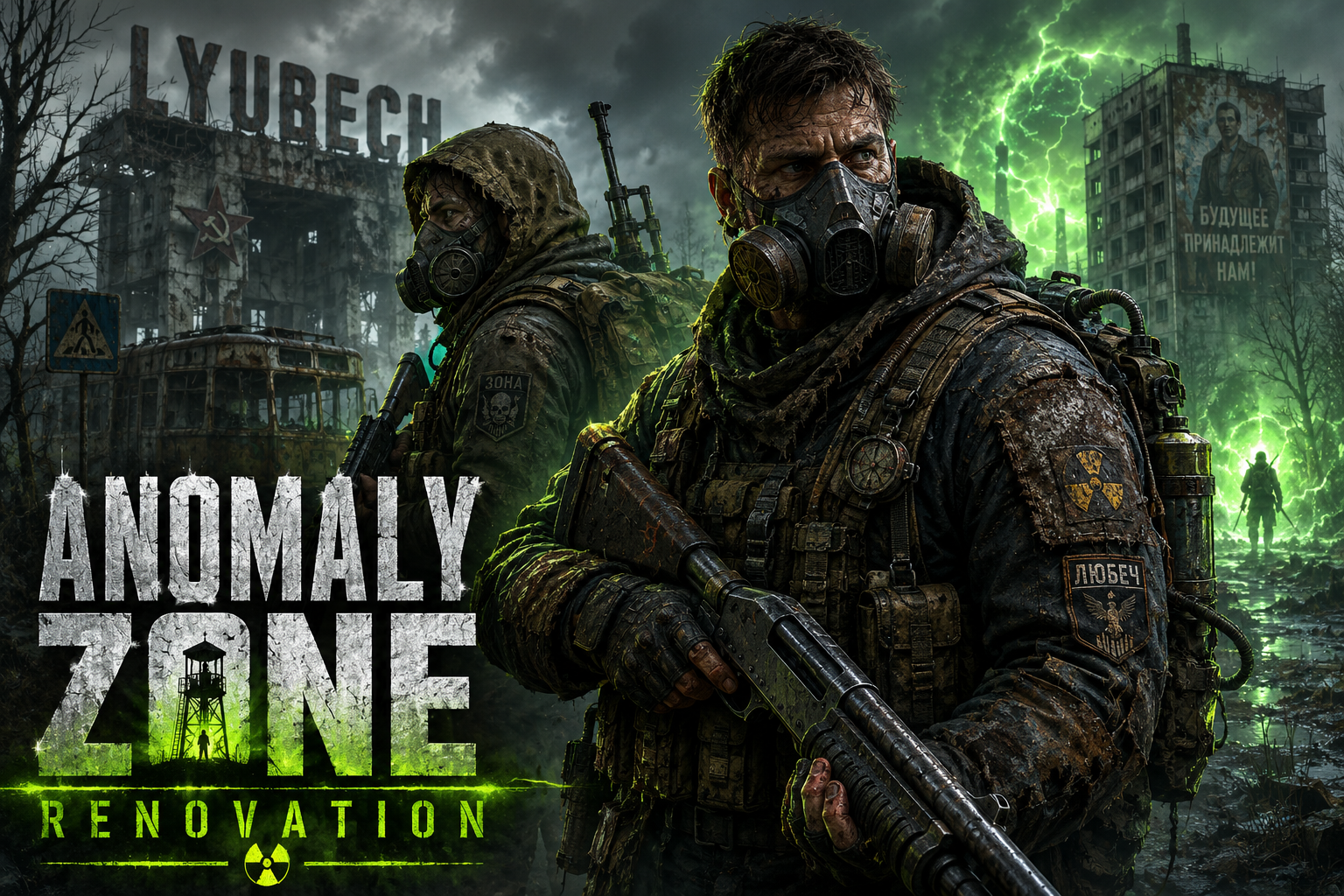
But a fresh coat of paint does not automatically fix a decade of technical debt. While the developers have stripped away some of the most punishing legacy mechanics, the Early Access launch has been met with fierce resistance from the community. To understand whether this updated wasteland is worth your time, we need to look under the hood. Here is the definitive breakdown of the revised mechanics, the overhauled economy, and the brutal reality of the game's current state.
The Lineage: From sZone to Steam
To appreciate the scope of Renovation, you have to understand the IP's fractured history. The game originally launched over a decade ago under the moniker sZone-Online (and in some regions, Stalker Online). It was a clunky, overly ambitious 40-square-kilometer sandbox that captured the bleak, post-apocalyptic atmosphere of the Ukrainian countryside but was bogged down by archaic MMO design.
Eventually, the project rebranded as Anomaly Zone, bringing a dedicated but small player base along for the ride. However, the original client was plagued by connection errors, a convoluted standalone launcher, and a notoriously hostile new-player experience.
Anomaly Zone Renovation is the developer's attempt to wipe the slate clean. By transitioning to a native Steam launch, NEW STORY GAMES bypassed the old installation hurdles. You no longer need to hunt down sketchy third-party installers or remember separate login credentials; your Steam account is your game account. This frictionless entry was designed to flood the servers with fresh blood, setting the stage for the mechanical reworks that define this new era.
Core Gameplay and UI: What Changed in Anomaly Zone Renovation
The most significant shifts in Renovation are found in the moment-to-moment survival mechanics. The original game was infamous for its hyper-realistic, often tedious inventory management. If you wanted to reload your weapon, you could not simply press 'R'. You had to open your inventory, drag individual bullets into a magazine, and then load that magazine into your firearm.
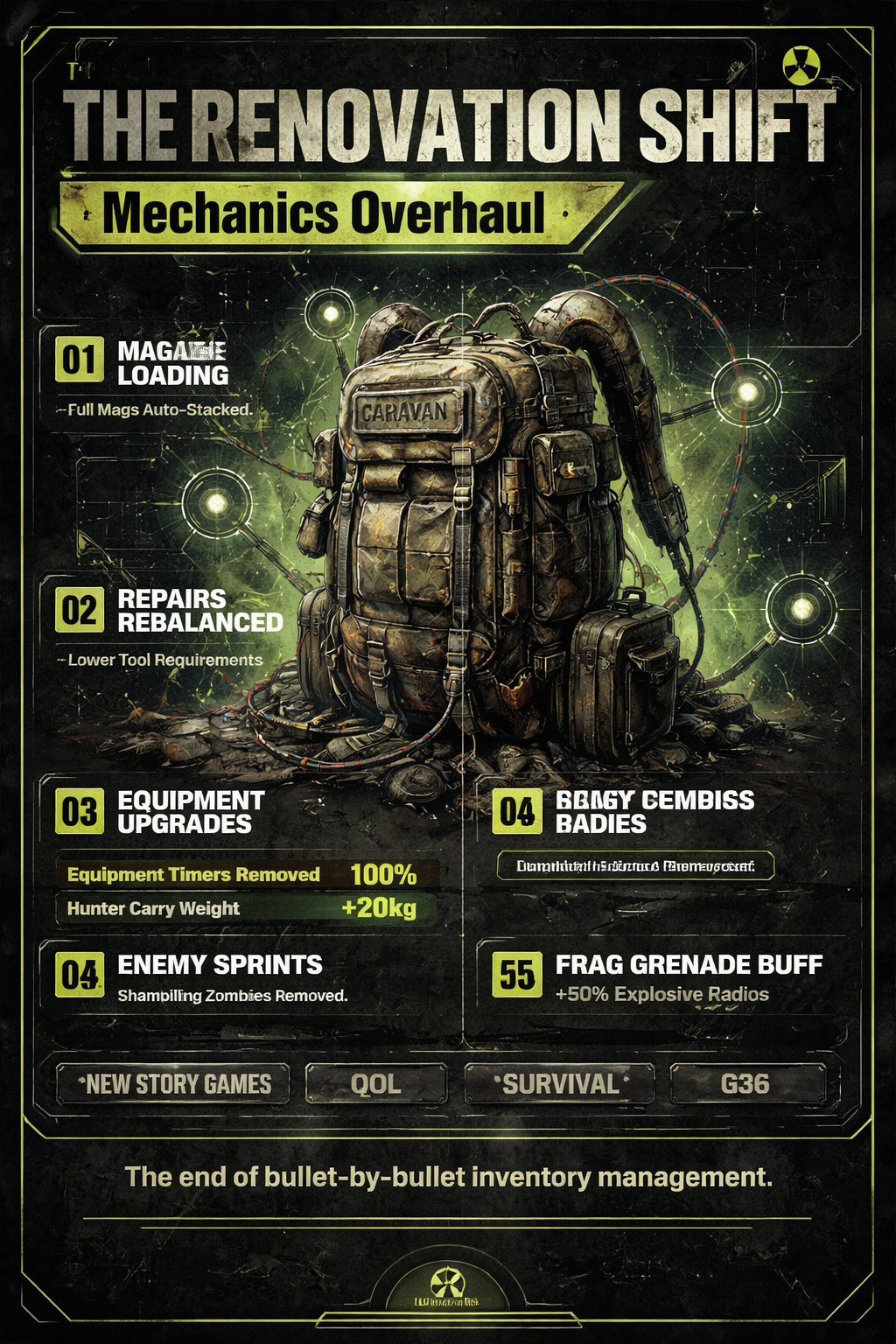
This bullet-by-bullet micromanagement has been completely excised. Magazines now function like a traditional shooter, significantly speeding up the pace of combat and removing the menu-juggling that got countless rookies killed during mutant ambushes.
Furthermore, the developers have entirely removed equipment timers. In the legacy version, certain premium or high-tier items would expire after a set amount of real-world time, forcing players into a predatory rental loop. Renovation replaces this with a standard durability and repair system. Your gear will still degrade—and repair costs have been sharply rebalanced—but your hard-earned "Caravan" backpack or "G36" assault rifle will not magically vanish from your stash while you are logged off.
The class system has also seen a subtle but vital rebalancing act. Players still choose between professions like Fighter, Assaulter, Sniper, and Hunter, but the stat distributions have been tweaked to make early-game survival less punishing. The Sniper class, for instance, still benefits from a crucial 90 HP bonus over other professions, which can be the difference between life and death in a PvP firefight. Meanwhile, the Hunter retains a 20kg carry weight advantage, an absolute necessity given the newly revamped loot economy.
Economy, Loot, and Trading: What Changed in Anomaly Zone Renovation
Survival in the Zone has always been tied to your bank account. Ammunition is scarce, armor degrades quickly, and medical supplies are a luxury. In the legacy version, the economy was a stagnant grind where mutant parts were largely viewed as low-value vendor trash.
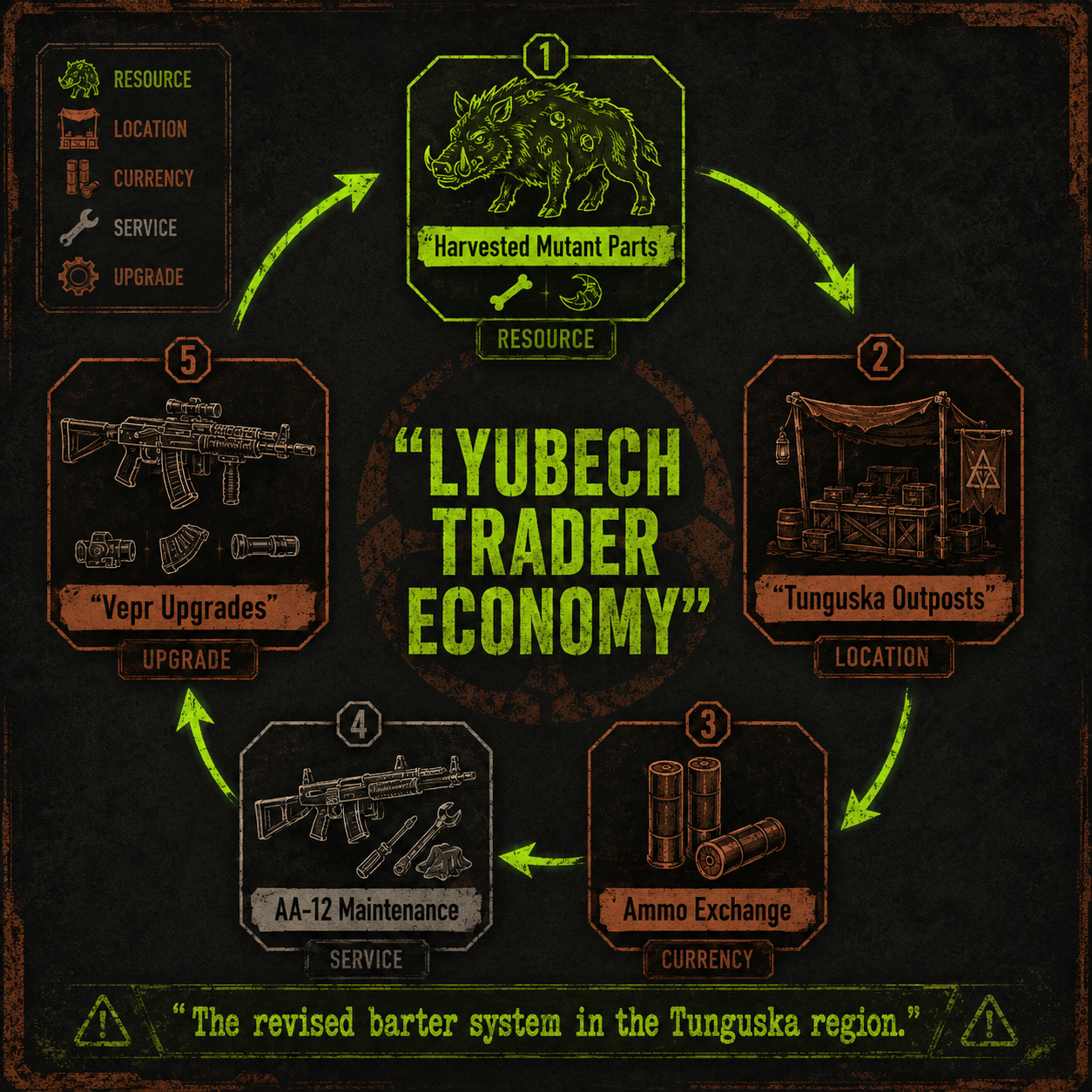
Renovation completely overhauls this economic loop. Artifact prices, mutant parts, and repair costs have all been subjected to a massive rebalance. The most notable change is the introduction of direct barter systems at major settlements. Traders in Lyubech and the Tunguska outposts now actively exchange harvested animal parts—like boar tusks and wild dog pelts—directly for ammunition and entry-level gear.
This creates a viable, self-sustaining gameplay loop for fresh spawns. Instead of grinding for raw rubles, you can hunt the local mutant wildlife to keep your "Makar" pistol or "MP5 SD" fed. For high-level players, this bartering system scales up, allowing clans to trade bulk resources for maintenance parts required to keep top-tier weapons like the "AA-12" automatic shotgun and the "Vepr" operational.
Warehouse clerks, repairmen, and high-end traders are still strictly confined to the larger safe zones. This forces players to plan their expeditions carefully, calculating the weight of their loot against the ammunition required to make it back to base. The removal of the old "pause animation" during inventory sorting means you are constantly vulnerable while checking your stash, adding a layer of tension to every scavenging run.
Anomalies and The Map: What Changed in Anomaly Zone Renovation
The geography of the Zone remains a sprawling, 40-square-kilometer nightmare of fog, abandoned scientific bases, and ruined subways. Veterans will immediately recognize the snow-swept fields of Novaya Zemlya and the dense, anomalous forests of Tunguska. However, the interactive elements within these environments have been fundamentally redesigned.
Anomalies—the invisible, deadly gravitational and elemental traps scattered across the map—have been visually and mechanically updated. While stepping into an anomaly in the original game was often an instant death sentence, Renovation treats them slightly more dynamically. Many anomalies will heavily damage you rather than outright kill you, allowing cautious players to retreat and bandage their wounds.
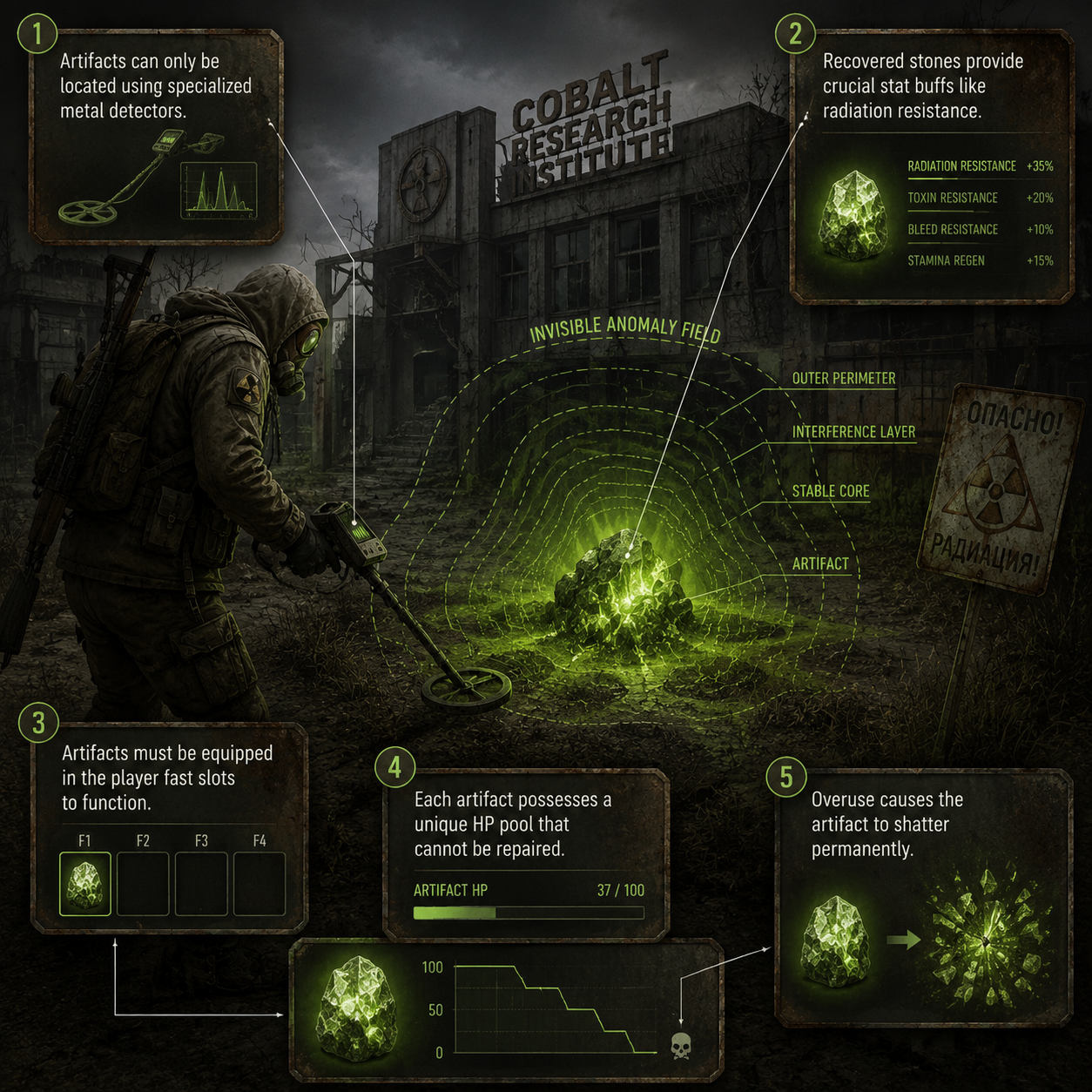
The real prize of the Zone, artifacts, have seen a major mechanical shift. These radioactive stones are the byproduct of the Cobalt Research Institute's failed experiments. In Renovation, artifacts can only be located using specialized metal detectors. Once extracted, they must be placed in a player's fast slots to provide their buffs—such as radiation resistance, increased resource extraction, or passive HP recovery.
But there is a massive catch: artifacts now possess their own unique HP pools that cannot be repaired. As you utilize an artifact's buff (which often drains your food and water meters in exchange), the stone degrades. Once its HP reaches zero, it shatters permanently. This forces players to constantly venture back out into the most dangerous, mutant-infested anomalous fields to restock their supply, driving the late-game PvE loop and fueling the player-driven economy.
Clan warfare remains the beating heart of the endgame. Twice a week, massive PvP battles erupt as clans fight for control over strategic bases. The newly stabilized Steam servers attempt to handle these mass combat events better than the legacy client, though the engine still struggles when dozens of players converge on a single chokepoint.
The Early Access Verdict
Despite the impressive list of mechanical improvements and quality-of-life changes, the reality of the May 2026 launch has been incredibly rocky. As of its opening weeks, Anomaly Zone Renovation sits at a "Very Negative" rating on Steam, with only 17% of user reviews skewing positive.
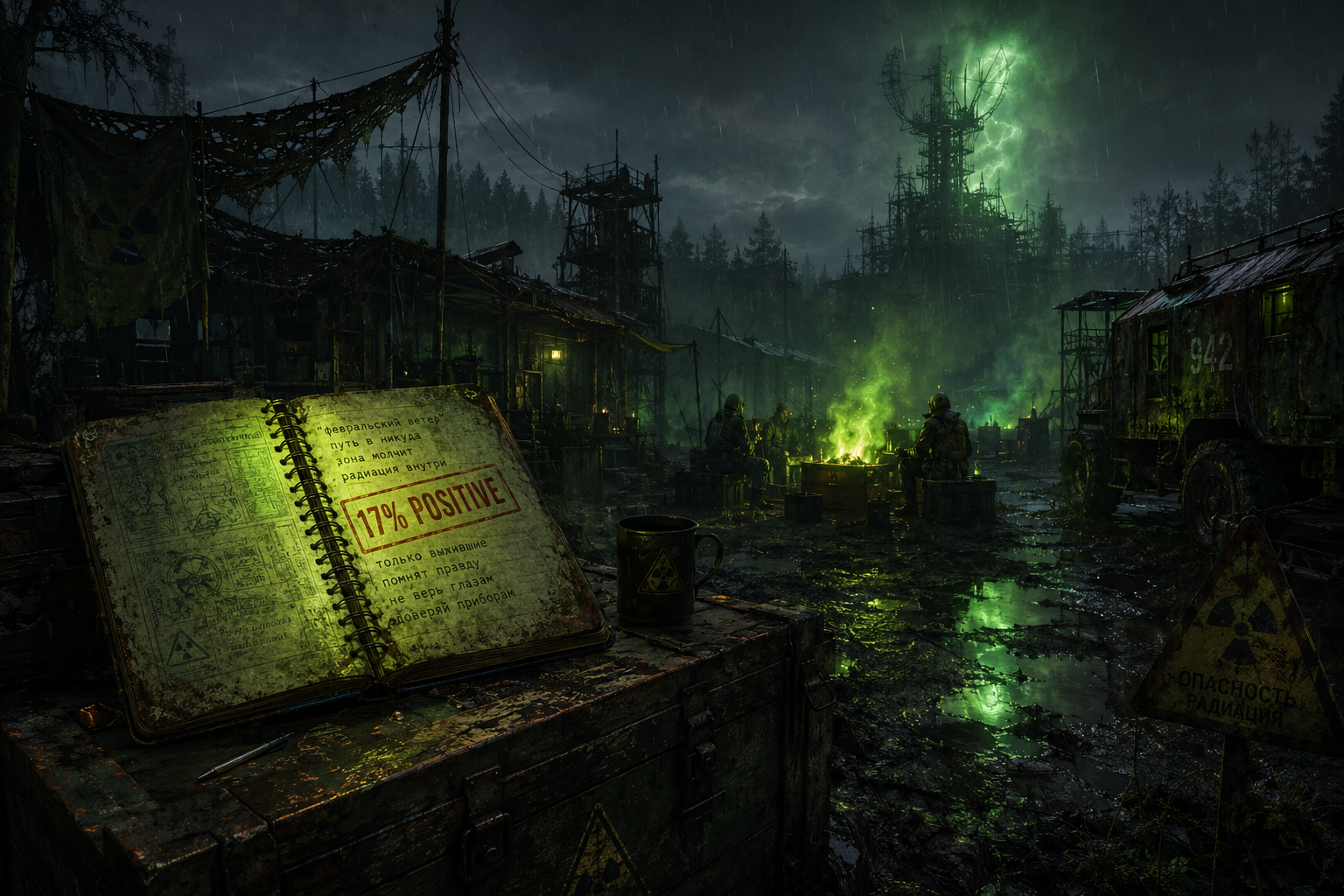
The primary culprit is not the gameplay loop, but the localization. The game was pushed to the global Steam storefront with an egregiously incomplete translation. English-speaking players are currently forced to navigate complex RPG skill trees, crucial quest descriptions, and deep inventory stats that are entirely in Russian Cyrillic. Playing a hardcore survival game where you cannot read the medical tooltips is an exercise in pure frustration.
Furthermore, while the removal of bullet-by-bullet loading is a blessing, the core combat still feels clunky and dated by modern shooter standards. The animations lack weight, and the hit registration during high-ping clan wars can be infuriatingly inconsistent. The developers at NEW STORY GAMES have promised that this Early Access period will last roughly 12 months, during which the localization and combat fluidity are top priorities.
For now, Renovation is exactly what it claims to be: a raw, unfinished construction site built over the bones of a legendary, punishing world. If you have the patience to decipher the UI and endure the bugs, the quintessential stalker atmosphere is still there, buried under the radioactive ash.
FAQ: What Changed in Anomaly Zone Renovation
Do I need the old sZone-Online launcher to play Renovation? No. The game is now fully integrated into Steam. You do not need to register a separate account on the developer's website or download a third-party installer. Your Steam account handles all authentication.
Did they fix the magazine loading mechanic? Yes. One of the most requested quality-of-life changes was implemented. You no longer need to open your inventory and drag bullets into your magazines one by one. Reloading now functions like a standard modern first-person shooter.
Are equipment timers still in the game? Equipment timers have been entirely removed in Renovation. Weapons and armor no longer expire after a set amount of real-world time. They have been replaced by a traditional durability system, meaning you must pay in-game currency and resources to repair your gear, but it will not permanently disappear.
Why are the Steam reviews for Anomaly Zone Renovation so negative? The "Very Negative" reception is largely due to an incomplete English translation at the May 2026 launch. Many crucial UI elements, quest descriptions, and item tooltips are currently stuck in Russian, making the steep learning curve nearly impossible for non-Russian speakers to navigate.
Sources
- Steam Database (SteamDB) Patch Notes and Player Charts for Anomaly Zone Renovation.
- Community playtest feedback and localization reports from the official Anomaly Zone Steam Community Hub.
- Legacy mechanic documentation from the original sZone-Online archive.